The Gator Ascendancy: What UF’s Historic Rankings Mean for Florida’s Future
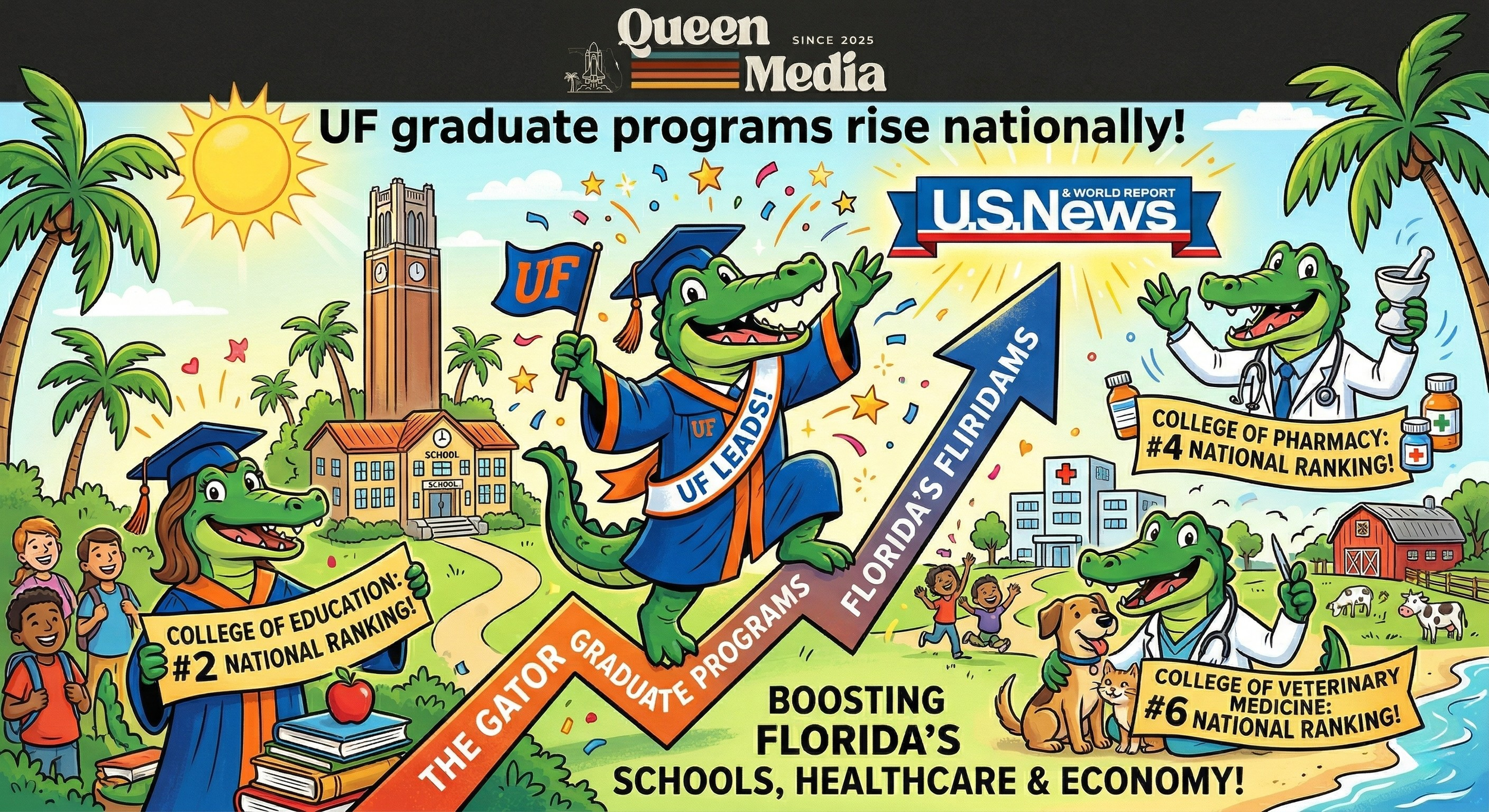
When the U.S. News & World Report drops its annual graduate school rankings, it usually triggers a brief flurry of press releases, a few celebratory social media posts, and a collective shrug from anyone outside of academia. But the 2026 rankings, released just yesterday, demand a closer look—especially if you live in Florida.
The University of Florida didn't just place well; it dominated. And while the headlines are currently focused on the prestige of the numbers, the real story is what this means for the local workforce, our schools, and our healthcare systems.
Here is why you should care about the latest Gator ascendancy.
The Classroom Crisis Meets a National Leader
Florida is no stranger to the nationwide teacher shortage. We feel it in our public school classrooms, our funding debates, and our community priorities. Against that backdrop, the UF College of Education just achieved something extraordinary: it rose from No. 6 to No. 2 nationally, marking its highest position to date.
This is not just a badge of honor for the faculty in Gainesville; it’s a critical pipeline for the state. Consider the specific programs driving this success:
Student Counseling: Ranked No. 2 in the country.
Special Education: Ranked No. 5 in the country.
At a time when student mental health and specialized instruction are two of the most urgent pressure points in K-12 education, having the second-best training ground in the United States right in our backyard is a massive advantage. The challenge now shifts to retention: Florida must ensure that these elite, UF-trained educators and counselors are incentivized to stay and work in state districts rather than being poached by higher-paying out-of-state systems.
Pills, Pets, and Public Health
Beyond the classroom, UF’s footprint in healthcare education proved just as formidable, with two of its major colleges securing entrenched top-10 status.
The College of Pharmacy (No. 4)
Securing the number four spot nationally cements UF's role as a powerhouse in pharmaceutical research and training. The college consistently leads the nation in placing students into competitive residency programs. For Floridians, this translates to highly skilled pharmacists filtering directly into our local hospitals and community pharmacies, improving patient care and driving forward localized research in drug delivery and therapeutics.
The College of Veterinary Medicine (No. 6)
Slipping only a single spot from last year, the UF College of Veterinary Medicine maintains a nearly decade-long streak of top-10 recognition. As the only veterinary teaching hospital in the state of Florida, this program is essential. Whether it is agricultural livestock management in the state's rural heartlands or advanced small-animal care in our coastal cities, the health of Florida’s animal populations—both economic and domestic—relies heavily on the graduates of this program.
The Ripple Effect
Rankings are inherently subjective, and they are often criticized for prioritizing institutional wealth over student outcomes. However, the U.S. News metrics closely weigh research funding, peer assessments, and job placement—metrics that translate directly to economic momentum.
When a state university secures top-tier graduate programs across education and medicine, the ripple effects are tangible:
Grant Magnetism: Top-ranked programs attract federal research dollars and private investments.
Brain Gain: It attracts high-performing students from across the globe, bringing new talent to the state economy.
Industry Partnerships: Tech, pharma, and agricultural companies are far more likely to set up shop near a Tier-1 research hub, driving up local property values and creating high-paying jobs.
The 2026 U.S. News rankings are certainly a victory lap for the University of Florida. But if state and local leaders leverage this momentum correctly, the real winner will be the Florida economy.
