The 8PM ultimatum: trump vs iran & space coast fallout
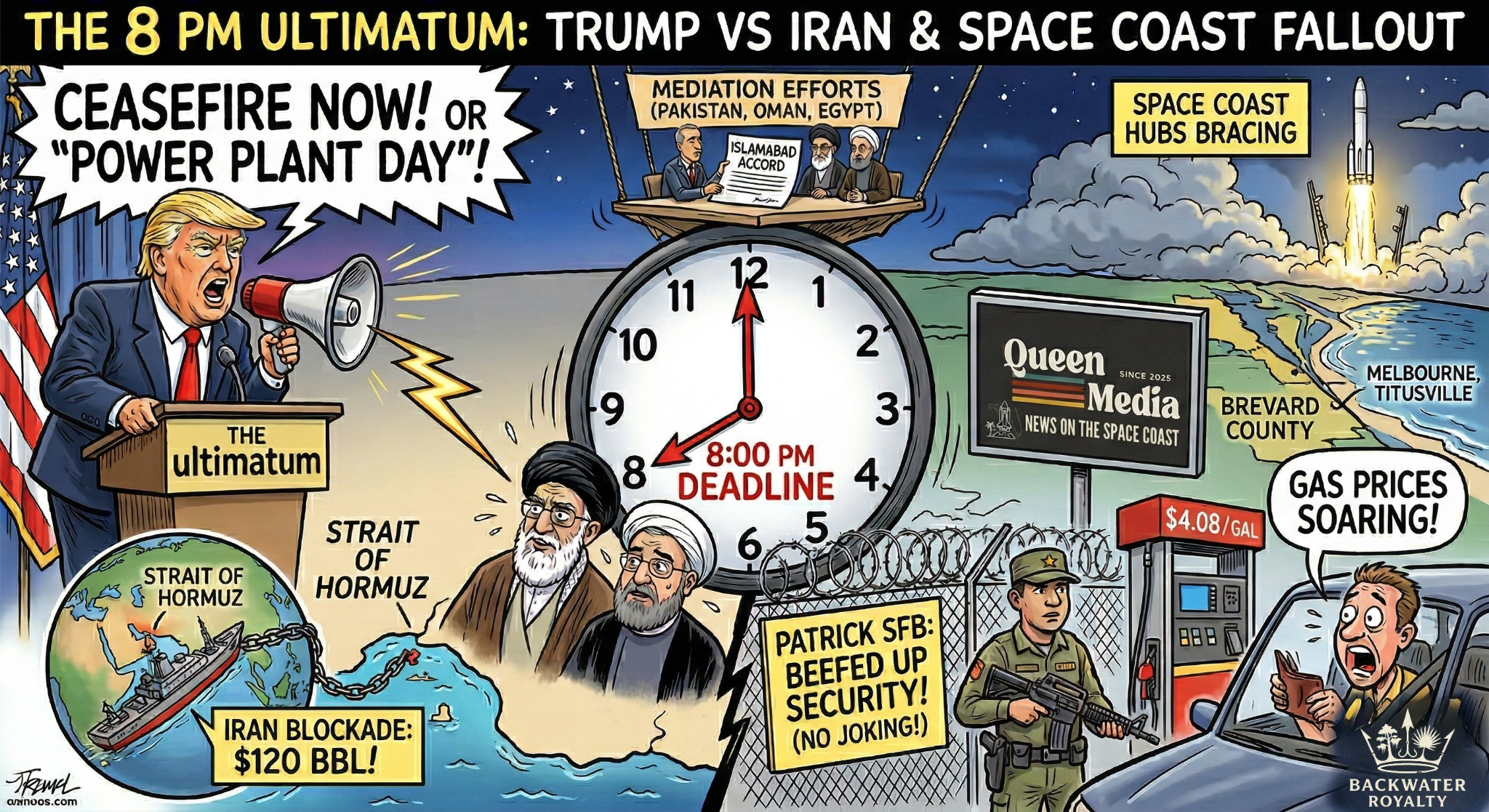
Image sponsored by Backwater Royalty
The clock is ticking on Washington, Tehran, and right here at home.
By 8:00 p.m. Eastern Time tonight, we will likely know whether the standoff in the Middle East will de-escalate through a last-minute diplomatic breakthrough or spiral into a devastating regional war. President Donald Trump has drawn a hard line in the sand, issuing a stark ultimatum to Iran: accept a ceasefire deal and reopen the Strait of Hormuz, or face an unprecedented military bombardment targeting the nation's energy and infrastructure.
The rhetoric coming from the White House over the past few days has been uncompromising. The President has warned that if Tehran does not capitulate, today will become "Power Plant Day, and Bridge Day," ominously stating that "a whole civilization will die tonight" if a deal isn't reached.
For many of us watching the news cycle from Melbourne to Titusville, a conflict 7,000 miles away might seem distant. But the shockwaves of this April 7 deadline are already crashing onto the Space Coast.
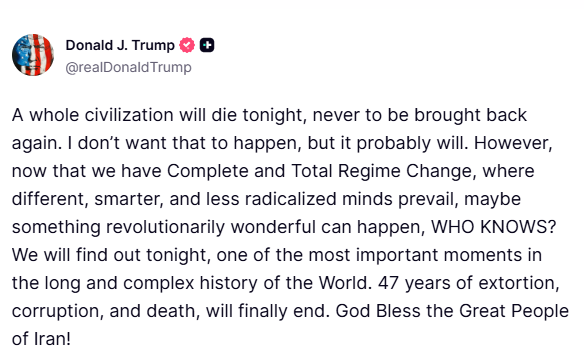
Truth social post made by President Trump
The View from Brevard
At the center of this crisis is the Strait of Hormuz, a narrow maritime choke point through which a fifth of the world’s oil and liquefied natural gas flows. Iran’s effective blockade of the strait over the last few weeks has sent crude oil prices soaring toward $120 a barrel.
You don't need a degree in geopolitics to feel that impact—you just need to drive down A1A or commute along I-95. The pain at the pump is tightening the belts of Space Coast working families, local small businesses, and the logistics networks that keep Brevard County running.
Furthermore, our region is a vital military and aerospace hub. With U.S. strike forces fully amassed in the Middle East, the personnel at Patrick Space Force Base and Cape Canaveral Space Force Station remain hyper-vigilant. I experienced this firsthand just the other day. I went on base to get gas, and while I am not going to say much, it was immediately clear that they have significantly beefed up security measures. The tension is palpable. Meanwhile, the commercial aerospace industry, heavily reliant on complex supply chains, stable energy markets, and secure global waters, is also bracing for the economic fallout that a prolonged, expanded conflict could trigger.
A Diplomatic Tightrope
Behind the scenes, regional mediators from Pakistan, Oman, and Egypt have been frantically trying to patch together the "Islamabad Accord"—a 45-day ceasefire proposal that would immediately reopen the Strait in exchange for time to finalize a broader nuclear and security settlement. Early reports suggest Iran has pushed back, demanding a permanent end to hostilities rather than a temporary pause, and rejecting the White House's initial 10-point proposal.
For now, the White House claims it has an active, willing participant on the other side of the table. But the President’s patience is notoriously short, and the Pentagon has made it clear that operational plans to strike Iran's Kharg Island oil export terminal, railways, and power grids are locked and ready to execute.
Tonight, the world holds its breath. Will this high-stakes maximum pressure campaign force a diplomatic concession, or will the Space Coast wake up tomorrow to a radically altered global landscape and deeply shaken energy markets?


At Queen Media News On the Space Coast, we'll be watching the 8 p.m. deadline closely. Until then, top off your gas tanks, keep our deployed service members in your prayers, and God bless America.
Sponsored by Backwater Royalty
