Operation Absolute Resolve: We Got the Kingpin. Now Let’s Build a Fortress, Not a Forever War.
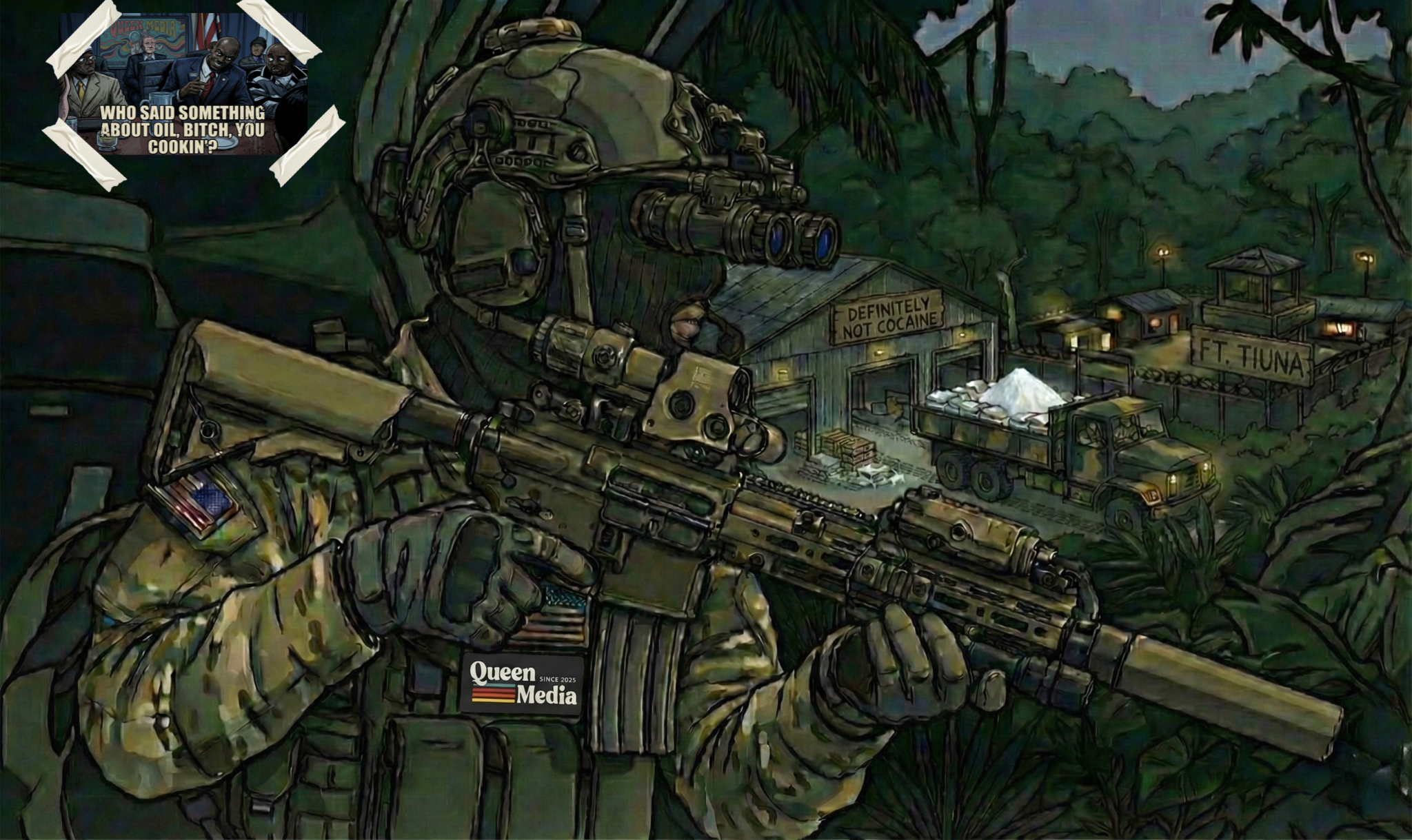
It is the headline freedom-loving people across the hemisphere have been praying for, even while the diplomatic class in Brussels and the permanent bureaucracy in Washington warned against it. On Saturday, President Donald Trump confirmed what the whispers in the intelligence community had been hinting at: Operation Absolute Resolve was a go, and Venezuelan dictator Nicolás Maduro is now in U.S. custody.
Captured. Not negotiated with. Not sanctioned into submission. Captured.
For years, we’ve watched Venezuela descend from the jewel of South America into a dystopian nightmare. We’ve watched a once-proud people scavenge for food while a criminal enterprise masquerading as a government grew fat on drug money. The "international community" offered summits; the United States Military offered a solution.
And let’s be absolutely clear about the mission itself: if the reports are accurate, this was a masterclass in American violence of action. This wasn’t a clumsy invasion or a rolling occupation. This was a surgical excision—a testament to the absolute badassery of our Special Forces. We are talking about operators who moved into the heart of a hostile capital, bypassed a fortress of Cuban intelligence, and extracted the most protected man in the region without leveling the city.
Think about the nerve required for that. These operators went into the dark, knowing that if they were compromised, there was no easy way out. They did it because they are the silent professionals who do the dirty, dangerous work so the rest of us can sleep at night. It reminds our enemies that there is no hole deep enough to hide from the United States when the order is given.
The View from the Ground
But this is where the cheering needs to stop and the hard reality needs to start.
I’m celebrating this tactical victory, but I’m doing it with a knot in my stomach. Why? Because I’ve seen this movie before. I didn’t watch the last two regime change efforts on CNN; I watched them through the optic of a rifle.
I served in Iraq and I served in Afghanistan. I walked the streets of Baghdad after the statues came down, and I patrolled the valleys of Helmand after the Taliban supposedly ran for the hills. I know exactly what it smells like when a government collapses. I know the feeling of the vacuum that opens up the second the strongman is gone.
In both of those scenarios, our military was lethal and efficient at breaking things. We toppled Saddam in weeks; we routed the Taliban in months. But then the mission crept. The "liberation" turned into an occupation. The surgical strike turned into a twenty-year science project in nation-building that cost this country trillions of dollars and thousands of American lives—friends of mine included.
We cannot let Venezuela become the third failed scenario. The uncomfortable truth that few in the D.C. think tanks want to admit is that killing the bad guy is the easy part. The hard part is resisting the urge to think we can engineer a Jeffersonian democracy in a country that has been rotting from the inside for decades.
The Beginning of the End for the Cartels?
However, there is one major difference between Baghdad in 2003 and Caracas in 2026: The Target.
We didn’t just take out a dictator; we decapitated a cartel. Maduro wasn’t just a socialist failure; he was the CEO of the Cartel of the Suns (Cártel de los Soles). His military generals were his lieutenants, and his state assets were his smuggling fleet. By extracting him, we haven't just changed a regime; we have shattered the logistics of the global cocaine trade.
This strike sends a shivering message to every narco-terrorist south of the Rio Grande: You are no longer untouchable. For decades, these groups have operated with impunity because they bought the protection of sovereign states. Maduro sold Venezuela’s sovereignty to the highest bidder—whether it was FARC dissidents, Hezbollah financiers, or Mexican kingpins.
That protection racket ended last night.
If the administration is serious about "America First" security, Operation Absolute Resolve shouldn't be a one-off. It should be the proof of concept for a new doctrine: We don't invade countries to build schools; we strike specific targets to kill the cancers that poison our own streets.
If we apply this same surgical pressure, here are the next three targets that should be sweating right now:
The CJNG (Jalisco New Generation Cartel) – Mexico: This isn't your grandfather's bootlegging operation; it is a paramilitary force that shoots down helicopters and uses drones to bomb rivals. They are the primary drivers of the violence destabilizing our southern neighbor. A surgical campaign dismantling their leadership structure—similar to the Maduro op—would do more for border security than any wall ever could. They rely on the illusion of military superiority; we just proved that illusion is a joke.
The Sinaloa Cartel (The "Chapitos" Faction) – Mexico: While CJNG brings the violence, Sinaloa brings the poison. They are the industrial engineers of the fentanyl crisis that is killing 70,000 Americans a year. They have operated under the assumption that they are "too big to jail." Maduro thought he was too big to jail, too. Taking out the labs and the leadership nodes of Sinaloa isn't an act of war against Mexico; it's an act of self-defense for American families.
The ELN (National Liberation Army) – Colombia/Venezuela Border: With Maduro gone, the ELN has lost its safe harbor. They are the bridge that connects Colombian coca fields to Venezuelan airstrips. They are Marxist guerillas turned drug lords who have terrorized the region for sixty years. Without the cover of the Venezuelan military, they are exposed. If we want to finish the job we started in Caracas, we have to cut the ELN link that feeds the supply chain.
The "Dream Scenario": A Fortress, Not a Police State
So, how do we avoid the "forever war" trap while still securing the victory?
The temptation in Washington will be to flood Venezuela with aid workers, election monitors, and bureaucrats to "fix" the country. We must say no. We are not good at that.
But there is a bolder, more strategic play available—one that might sound radical but is actually the ultimate stabilizer. We don't need to run Venezuela. We need to lease a piece of it.
The dream scenario isn't a U.S. embassy handing out pamphlets on voting rights; it is a permanent U.S. military base. I’m talking about a Ramstein Air Base for South America. A sovereign slice of territory, leased for 99 years, that serves as the unsleeping eye of the Western Hemisphere.
Think about what we have in Germany, in Japan, in South Korea. We don't govern those nations, but our physical presence ensures that no other great power—be it Russia or China—can ever gain a foothold. We treat those bases almost like U.S. territory: secure, self-sufficient, and untouchable.
Imagine a "Camp Liberty" on the Venezuelan coast. It would serve three critical purposes:
Counter-Narcotics Hub: It provides a forward operating base for drones and Coast Guard cutters to strangle the drug trade at the source, rather than trying to catch it at the Rio Grande.
Great Power Deterrence: It sends a permanent message to Beijing and Moscow: The Monroe Doctrine is back, and it has an airfield. You are not welcome in our neighborhood.
Stability without Occupation: It allows the Venezuelan people to rebuild their own government, knowing that the threat of a military coup or a foreign invasion is nullified by the Americans down the road. We provide the security umbrella; they do the political heavy lifting.
Some will say this is imperialism. I call it insurance. It is the only way to ensure that the blood and treasure we just risked in Operation Absolute Resolve doesn't go to waste. We don't want to conquer Venezuela. We just want to make sure it never becomes a launchpad for our enemies again.
We have cut the head off the snake with Operation Absolute Resolve. Now, we need to make sure it doesn't grow back. We’ve proven we can win the war. The question remains: do we have the wisdom to secure the peace without getting bogged down in it?
A permanent base is the answer. It’s bold, it’s necessary, and it’s the only language the bad guys understand.
