The DOJ Sacks the Shield: Why the Government is Probing the NFLs TV Empire
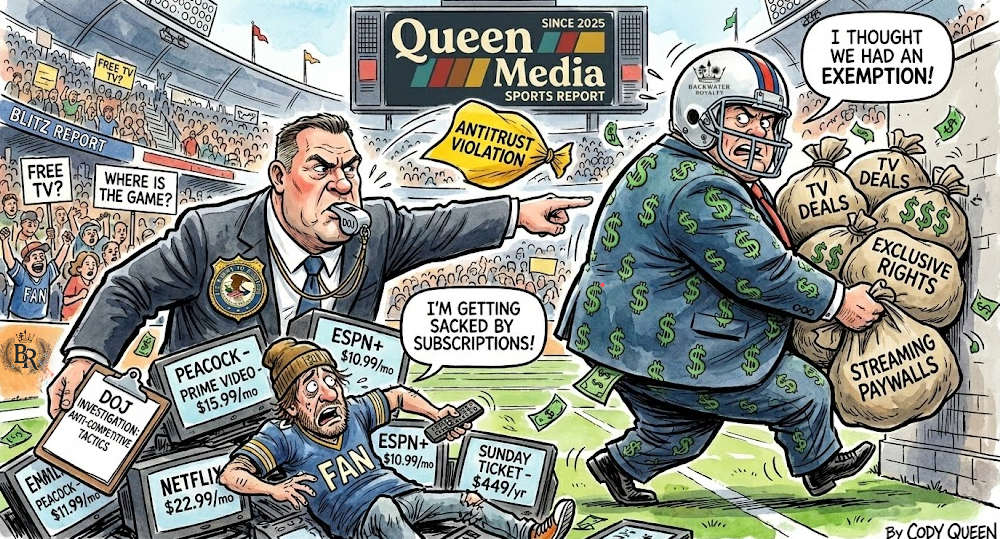
Let’s be honest: being an NFL fan right now requires the financial planning of a hedge fund manager. Between cable packages, Thursday nights on Prime Video, holiday games on Netflix, and random playoff matchups exclusively streaming on Peacock, keeping up with the shield has never been more exhausting—or expensive.
And now, it looks like the federal government agrees.
The U.S. Department of Justice has officially launched an antitrust investigation into the National Football League, focusing on whether the leagues media distribution tactics cross the line from highly profitable to illegally anti-competitive. First reported by The Wall Street Journal, the probe is aiming right at the heart of the NFLs massive 110 billion dollar media empire to see if these exclusive, fragmented broadcast deals are unfairly driving up costs for the everyday fan.
Here is a breakdown of why the feds are throwing a flag on the play, and what it means for your Sunday viewing habits.
The Heart of the Issue: Streaming Fatigue and the Wallet Squeeze
For decades, the NFL has operated under a very specific, golden ticket: The Sports Broadcasting Act of 1961.
This historic antitrust exemption allows the NFL to pool the broadcast rights of all 32 teams and sell them collectively to national television networks. Without this exemption, teams would have to negotiate their own TV deals, creating massive financial imbalances between major market powerhouses and smaller franchises.
However, there is a catch. That 1961 law was written for traditional broadcast television. Courts have previously ruled that the exemption does not automatically extend to premium cable or paid streaming platforms.
The DOJ, spurred on by lawmakers like Senator Mike Lee, is now asking a very simple question: If the NFL is hiding prime matchups behind multiple subscription paywalls, does it still deserve that historic antitrust exemption?
The Playbook: What the DOJ is Looking At
The government is building a case around affordability and market dominance. Here are the core factors driving the investigation:
The Paywall Problem: Fans are essentially being forced to buy multiple, fragmented subscriptions to follow the league. Lawmakers have argued that keeping up with the modern NFL can cost a fan close to 1,000 dollars a season across various platforms, with Forbes estimating the baseline cost at roughly 765 dollars last year.
Renegotiation Bullying: The investigations timing is no coincidence. The NFL is currently trying to squeeze billions more out of its broadcast partners. Because Skydance recently purchased Paramount, the parent company of CBS, a change-of-ownership clause was triggered. The NFL is reportedly demanding up to 1 billion dollars more per season from CBS, which has other broadcast partners sweating over the rising costs of doing business.
Corporate Pushback: Traditional networks are getting tired of paying premium prices while the NFL simultaneously hands exclusive games to tech giants like Amazon and Netflix. It is a clear signal that the legacy media ecosystem is feeling the squeeze just as much as the everyday viewer.
The NFLs Defense
The league is not backing down. The NFLs front office maintains that its distribution model remains the absolute most fan and broadcaster-friendly system in the entire sports and entertainment industry.
They are quick to point out the math. According to the league, 87 percent of games remain on free, over-the-air television, and every single local game is broadcast for free in the competing teams home markets. They also point to the record-breaking viewership of the recent 2025 season as proof that fans are finding the games without issue.
What This Means for the Fans
Look, it is entirely valid to feel financially drained by the modern sports landscape. The days of simply turning to a local channel on a Sunday afternoon and getting everything you need are long gone.
If the DOJ actually cracks down on the league, it could force a massive restructuring of how the NFL packages its games. We could see a halt to the aggressive migration toward exclusive streaming deals, potentially keeping more games on traditional broadcast TV. On the flip side, if the NFL were to somehow lose its antitrust exemption entirely, the leagues competitive balance and salary cap structure could implode overnight.
For now, the DOJ is just reviewing the tape. But make no mistake: the biggest matchup of the year is not happening on the gridiron—it is happening in Washington.
