Queen Media Exclusive: Turning the Tide on the Indian River Lagoon
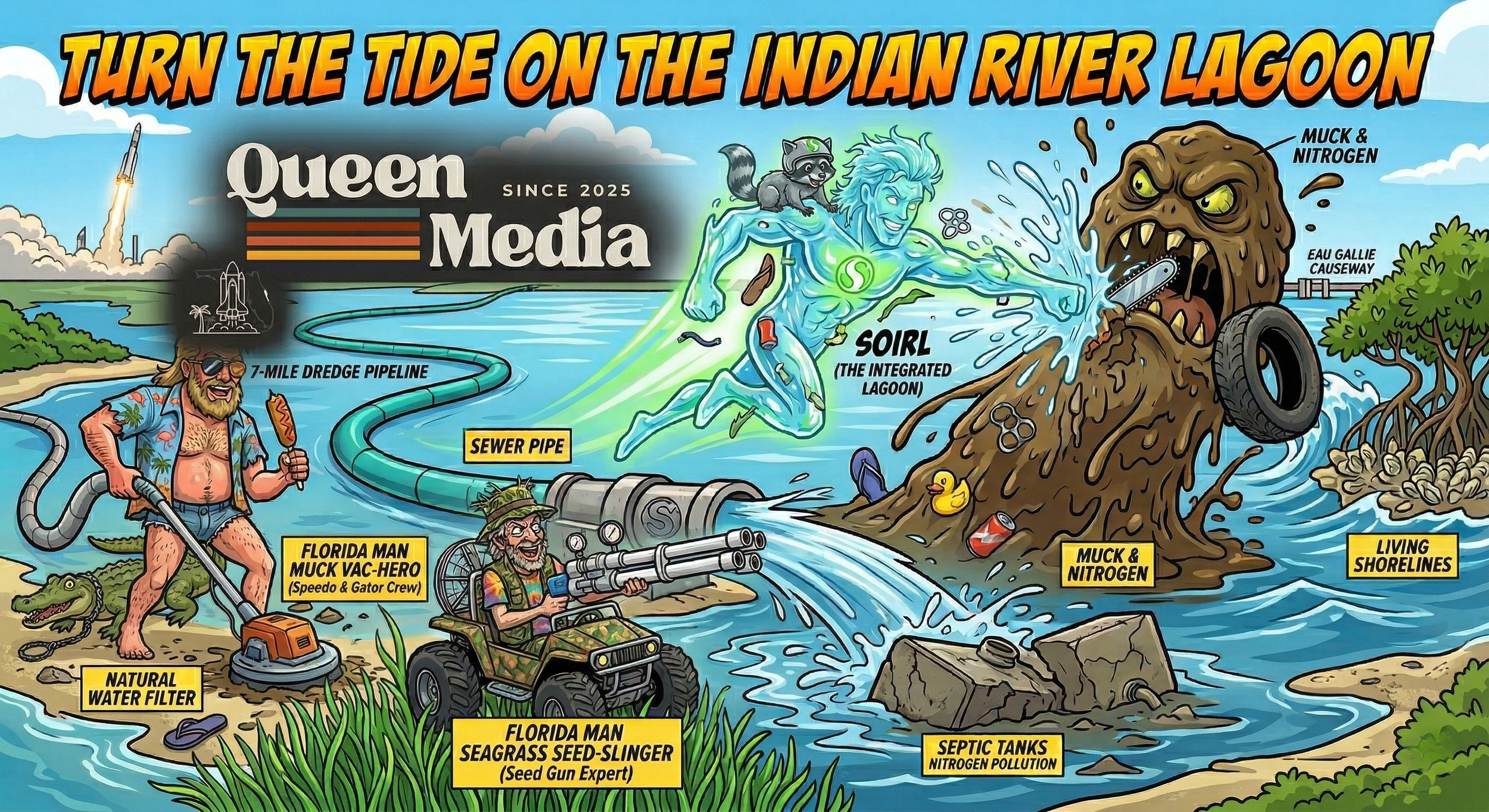
For years, Space Coast residents have watched the Indian River Lagoon (IRL) struggle with algal blooms, muck buildup, and devastating seagrass loss. It’s been a long, often frustrating road for Brevard County. But as we head into the spring of 2026, the local conversation is shifting from damage control to cautious optimism.
Thanks to massive local tax initiatives, federal grants, and the relentless work of environmental groups, the estuary is beginning to show real signs of healing. Here is your Queen Media update on the projects, the progress, and the marine life returning to our backyard.
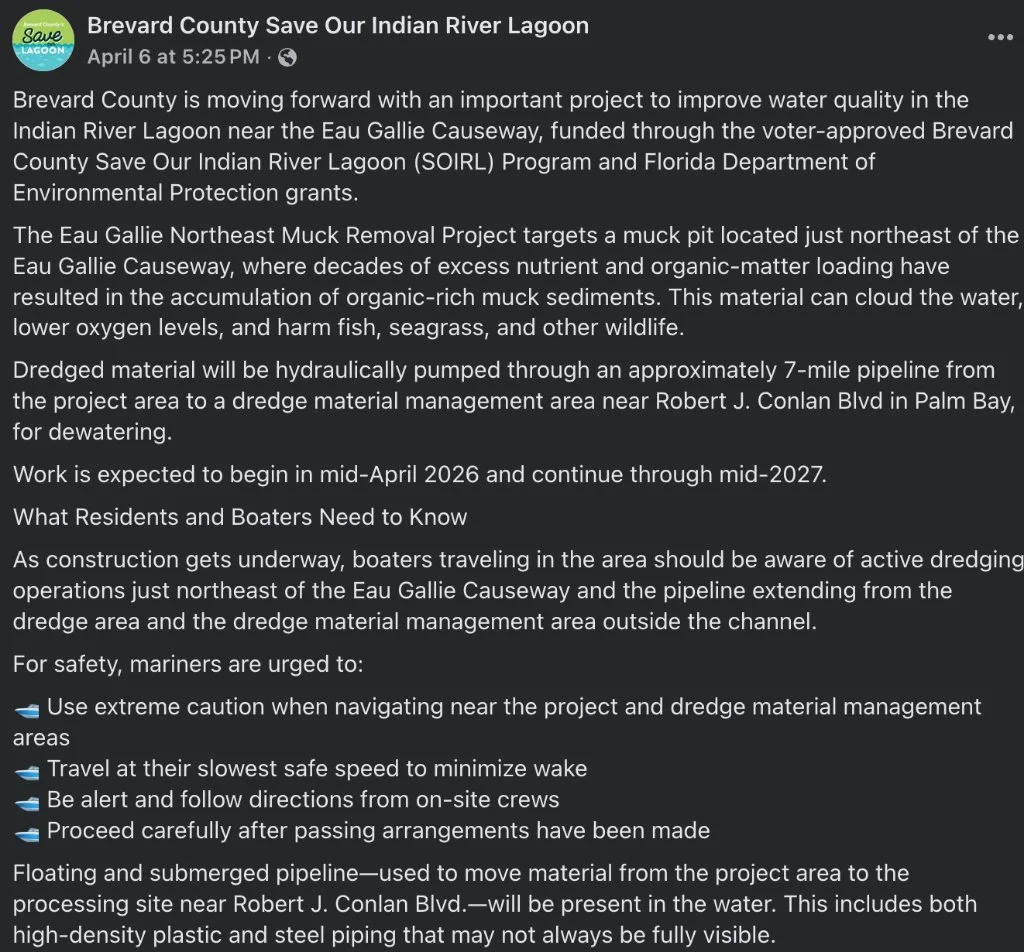
Brevard County Save Our Indian River Lagoon via Facebook
Major Muck Removal at Eau Gallie
[Embed Facebook Post Here: Brevard County Save Our Indian River Lagoon - April 6 Update]
Just this week, the county announced the kickoff of the Eau Gallie Northeast Muck Removal Project, funded by the voter-approved Save Our Indian River Lagoon (SOIRL) program and the Florida Department of Environmental Protection.
Starting in mid-April 2026 and running through mid-2027, crews will be tackling a massive "muck pit" just northeast of the Eau Gallie Causeway. Decades of nutrient runoff have created thick, organic-rich sediment that clouds the water, depletes oxygen, and chokes out seagrass and wildlife.
To clear this out, dredged material will be hydraulically pumped through an approximately 7-mile pipeline down to a dewatering site near Robert J. Conlan Blvd. in Palm Bay.
Boater Safety Alert: If you are out on the water, you need to be aware of active dredging operations. The floating and submerged pipeline—made of steel and high-density plastic—may not always be fully visible.
Use extreme caution when navigating near the project and dredge material management areas.
Travel at your slowest safe speed to minimize wake.
Be alert and follow directions from on-site crews.
Proceed carefully after passing arrangements have been made.
Federal Backing & "Super Clams"
Earlier this year, the Indian River Lagoon Council secured a massive $9.4 million in NOAA funding to supercharge 15 habitat restoration projects over the next two years. What does that look like on the water?
21 Million Clams: Teams are deploying genetically resilient "super clams" to act as natural water filters.
Seagrass & Shorelines: The initiative aims to restore 45 acres of seagrass, 8,450 linear feet of shoreline, and plant over 2,300 mangroves.
Wetland Reconnection: By removing old mosquito impoundment dikes, over 2,100 acres of wetlands are being reconnected. This allows the land to filter out nutrients before they ever reach the lagoon.
The best news? The seagrass is naturally starting to pop back up in areas where it had vanished just a few years ago. Researchers are reporting clearer water and an abundance of fish, signaling that the ecosystem is responding incredibly well following a relatively calm 2025 hurricane season.
Brevard’s Push to Ditch Septic
While nature does its part and dredging clears the bottom, Brevard County is attacking the root cause of the pollution: nitrogen and phosphorus runoff.
The Save Our Indian River Lagoon (SOIRL) program—funded by the 0.5% half-cent sales tax—has now completed or is actively working on over 400 projects countywide. The SOIRL program's massive impact recently earned it the prestigious Brilliance Award of Regional Impact from the East Central Florida Regional Planning Council.
A major focus right now is the aggressive septic-to-sewer conversion. Leaky, outdated septic systems have long been a primary culprit for lagoon pollution.
Brevard County and local cities are offering homeowner incentives and grants—offering up to $20,000 per household—to upgrade to advanced, nitrogen-reducing septic systems or connect to central sewer lines.
These efforts collectively remove thousands of pounds of nitrogen from the lagoon annually.
Living Shorelines Are Working
We are also seeing tangible, physical changes along the coast thanks to "living shorelines." By installing natural elements like oyster reefs and native vegetation, wave energy is reduced.
Recent early-2026 data shows that these shorelines are already trapping sediment and excess nutrients in the soil rather than letting them fuel harmful algal blooms. In some spots, natural sand formations are visibly connecting the shore to offshore oyster reefs. It’s literal ground being gained back.
As Brevard County considers the eventual renewal of the SOIRL sales tax, the visible return of clear water, thriving clams, and sprouting seagrass makes the strongest possible case for staying the course.
Keep following Queen Media for ongoing updates on our Space Coast environment, local politics, and community news.
