The "Smart Signal" Fix: Why You’re Hitting Every Red Light on Wickham
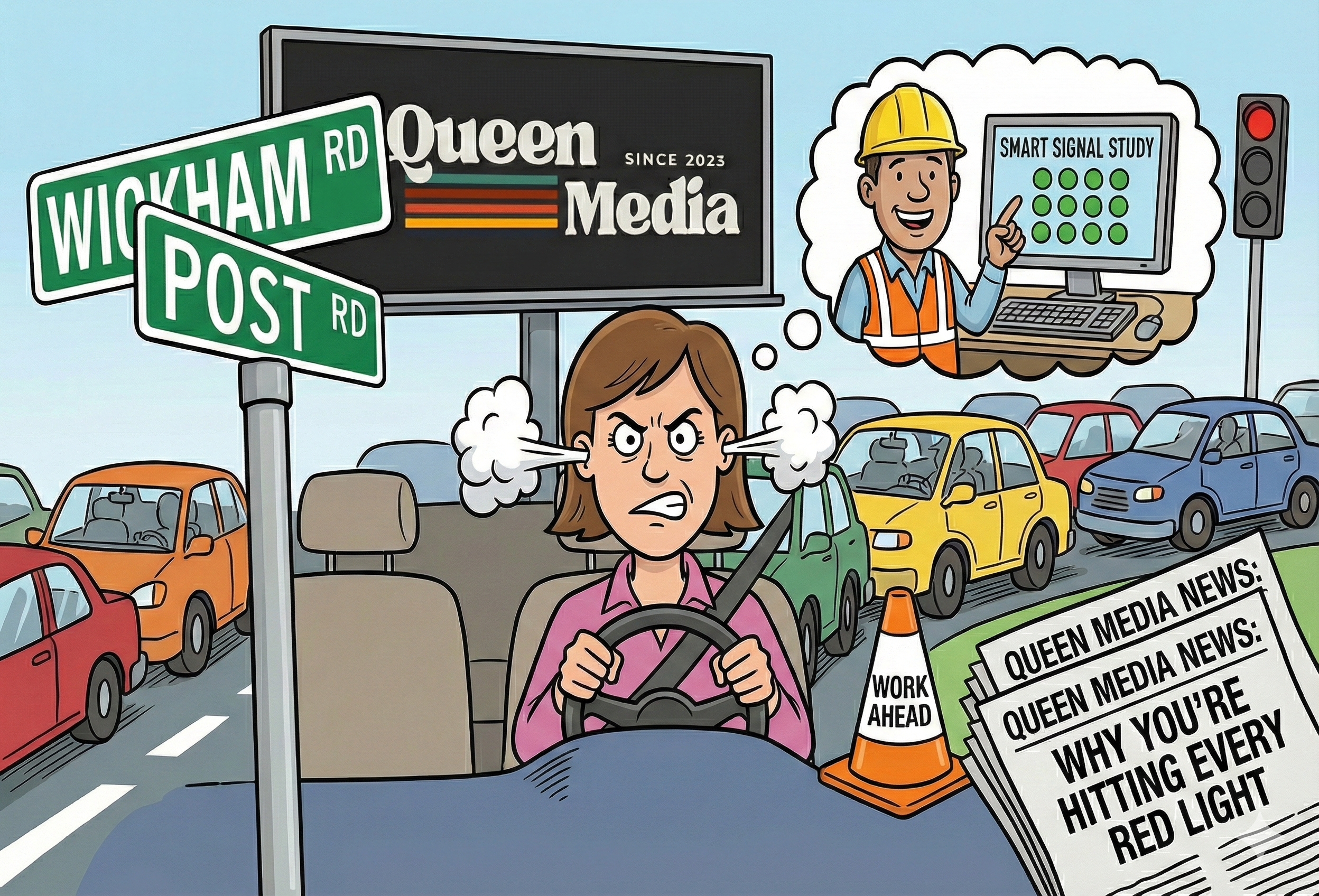
If you’ve driven down Wickham Road or U.S. 1 lately, you’ve likely played the "red light lottery"—and lost.
We all know the feeling. You’re heading home to Eau Gallie after a long day. You hit the light at Post Road. Then you hit the light at Aurora. By the time you reach Sarno, you’re gripping the steering wheel with white knuckles, wondering if the city’s traffic engineers have a personal vendetta against your brake pads.
But here is the good news: It’s not in your head, and relief is actually on the schedule.
The City of Melbourne has officially launched a comprehensive Traffic Signal Timing Study, a massive data-crunching project that kicked off in late January and is running through mid-February. While "data collection" sounds about as exciting as watching paint dry, for those of us living in the 32935 zip code, this study is the first step toward reclaiming our commute.
The Science of "Platooning"
To understand what the city is doing, you have to understand a traffic engineering concept called "platooning."
Right now, our traffic flow is often disjointed. One car gets a green light, speeds up, and hits a red light two blocks later. The car behind it does the same. This stop-and-go effect creates the "accordion" traffic jams we see on Wickham and Commodore every rush hour.
The goal of the new study is to synchronize the signals so that cars move in a "platoon"—a group of vehicles traveling together that hits a succession of green lights. When it works, it’s like magic. You get a green at Post Road, and if you maintain the speed limit, the lights at Aurora and Lake Washington turn green just as you arrive.
The city is currently analyzing 56 major intersections, starting with the U.S. 1 corridor—the busiest artery in our community. They are using cameras with fisheye lenses to count cars, trucks, and turning movements. This isn't about catching speeders; it’s about teaching the traffic computers how we actually drive in 2026.
The Construction Before the Calm
Of course, you can’t make an omelet without breaking a few eggs (or closing a few lanes). Before we get to the smooth sailing of synchronized lights, we have to navigate a particularly busy February of road work right here in our backyard.
If you live off Post Road, you’ve likely already seen the cones. From February 2nd through the 6th, there are intermittent lane closures between Wickham Road and Estancia Way. This is utility work, the kind of unglamorous digging that keeps our power on and water flowing. It’s a headache, yes, but it’s temporary.
More significant is the closure coming to Leonard Weaver Boulevard. Starting February 9th and running through the end of the month, the road will be closed to thru traffic at University Boulevard.
This one is actually exciting for the neighborhood. They aren't just fixing a pipe; they are constructing a sidewalk and extending a culvert as part of the Melbourne Southwest Trails project. For years, residents in the University Blvd area have asked for better pedestrian connectivity. This project is a direct answer to those requests. It’s a short-term detour for a long-term gain in walkability—something the Eau Gallie area desperately needs more of.
Why Now?
You might be asking, "Why do they have to do this all at once?"
The timing isn't accidental. Traffic patterns in Melbourne change constantly. New housing developments near the Arts District, the expansion of businesses along the Apollo corridor, and the shifting shifts of our major engineering employers mean that a traffic plan from 2022 is already obsolete.
The city performs this signal study every two years, but this year’s iteration feels more critical. With the recent population bumps in Brevard, our roads are carrying capacity loads they weren't originally designed for. We can’t easily widen Wickham or U.S. 1 anymore—the buildings are too close to the road. The only solution left is to make the existing asphalt smarter.
The Timeline for Relief
So, when will you stop seeing red?
The data collection phase wraps up around mid-February. But don’t expect the lights to change overnight. The engineers have to take that mountain of data, run it through simulation models, and design the new timing schedules.
The city estimates the full analysis and implementation will be finished by June 2026.
That means we have a rough spring ahead of us. We have to dodge the cones on Post Road this week. We have to find a new route around Leonard Weaver for the rest of the month. And we have to sit through a few more frustrating red light cycles on U.S. 1 while the cameras do their work.
But come summer, if everything goes according to plan, you might just find yourself driving from the Eau Gallie Causeway to NASA Blvd without touching your brake pedal once.
Until then, Queen Media News recommends turning up the radio, taking a deep breath, and remembering: The flashing lights and orange cones are signs that someone is finally paying attention to our commute.
