The Enemy Has Changed: From Corporate Giants to Green Lawns
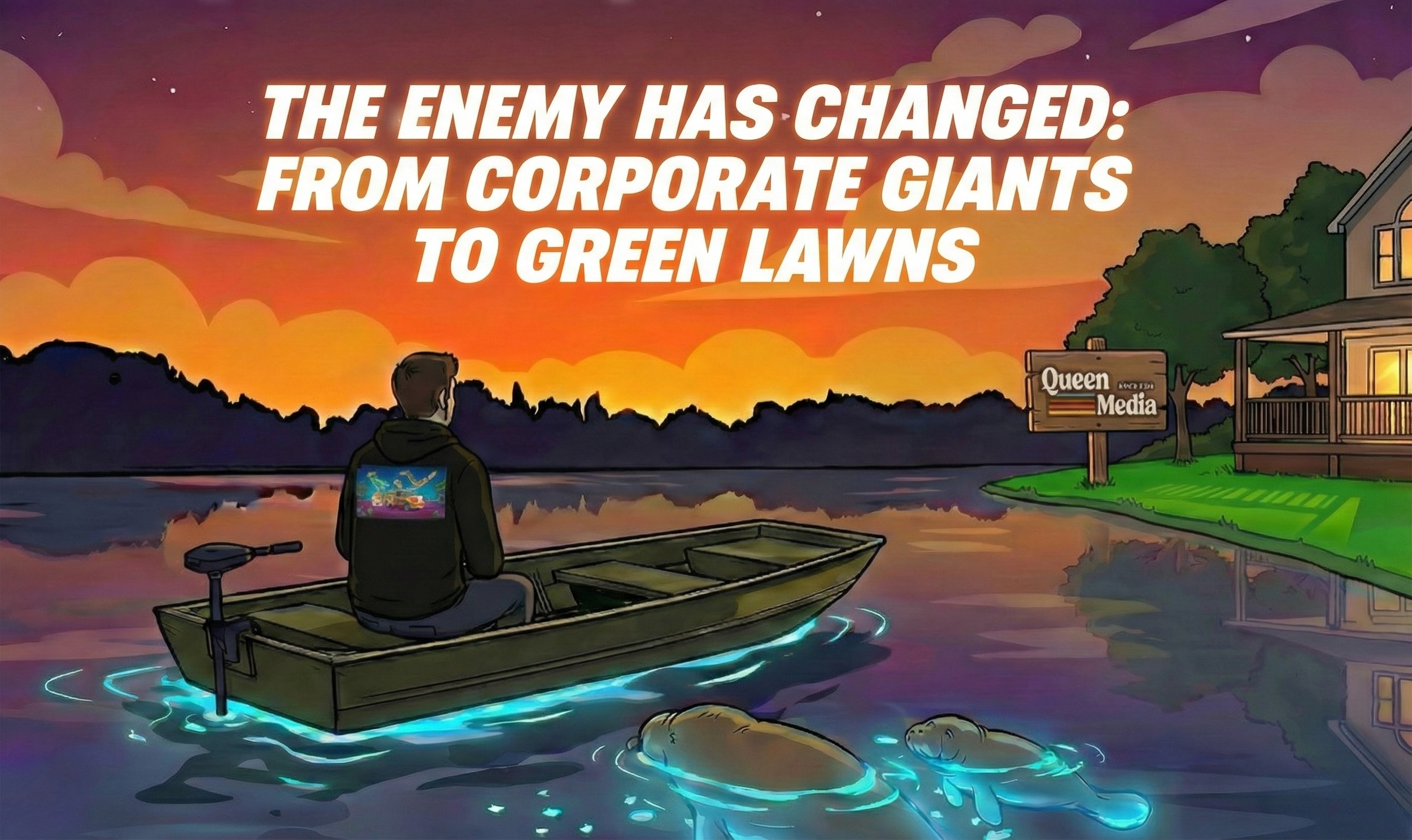
Years ago, when I was on ESPN Coastal I did a show called Coastal Adventures, I spent my days wading through the marshes of the Georgia coast with my son Colton. It was beautiful, but it was a battlefield. I remember standing in the salt marsh near Brunswick in the morning and then interviewing the tireless and brave advocates like Rachael Thompson from the Glynn Environmental Coalition (GEC) later that day in the studio. We were fighting a tangible, monolithic enemy: Honeywell. The narrative was clear-cut, almost cinematic in its stark morality. A corporate giant had dumped mercury and PCBs into the estuary, poisoning the water and the people, and it was our job to hold them accountable. We chased the pollution to its source, pointed fingers at the smokestacks and the discharge pipes, and demanded justice. When I asked Rachael Thompson for a quick quote on the size of the damage in that area and she said “The entire Turtle River estuary, there are just hundreds of various sized creeks in the marsh in that area”.
Fast forward to January 2026. I am standing on the banks of the Indian River Lagoon in Central Florida. The water laps against the seawall, a murky, tannin-stained broth. The air is humid, carrying that distinct, earthy scent of an estuary that is trying to breathe. The fight for clean water is still raging, but as I read the latest "State of the Water" reports for this new year, I realize the war has changed. The enemy is no longer just a single corporate villain like Honeywell. The enemy is us.
As we turn the calendar to 2026, Florida’s aquatic ecosystems are sitting at a precarious intersection of fragility and recovery. If you look at the headlines, you might see a "fragile renaissance." For the first time in years, the Marine Resources Council has upgraded the Central Indian River Lagoon from "poor" to "okay." That sounds underwhelming, doesn't it? "Okay." But in the world of marine biology, after a decade of catastrophic seagrass collapse and manatee starvation, "okay" is a victory. It means the patient has moved out of the ICU and into the recovery ward.
But do not let that upgrade fool you. The water column remains chemically "poor," a toxic tea loaded with legacy nutrients. And while the Southwest Gulf Coast is enjoying a respite from the red tide this winter, the Panhandle is currently choking on it. It’s a tale of two Floridas: one coast is clear, while folks in Bay County are coughing their way through beach walks as Karenia brevis counts soar past 100,000 cells per liter.
The most jarring revelation of 2025 came from the Ocean Research & Conservation Association (ORCA). For years, we’ve screamed about fertilizer bans. We established "blackout periods" during the rainy season, patrolling the aisles of hardware stores. But ORCA’s latest data found that the nutrient surges in our lagoons correlate with rainfall even when no fertilizer is applied. The culprit? Grass clippings.
It turns out that the American obsession with the perfect, manicured lawn is killing the very water that gives our property its value. When grass clippings are left on driveways or blown into storm drains, they decompose. They release a massive burst of nitrogen and phosphorus—the same stuff we banned in the fertilizer bags. We are effectively brewing a nutrient stew in our canals that feeds the algae.
In Georgia, with the GEC, we fought a factory. Here in Florida, we are fighting a mindset. It is much harder to look a neighbor in the eye and tell them their landscaping habits are destroying the estuary than it is to rally a protest against a multinational corporation. The diffusion of responsibility is our greatest hurdle. Every grass clipping, every leaking septic tank in the St. Johns River basin, contributes to the "death by a thousand cuts" that plagues these waters.
This winter brings another sobering shift. For the past few years, we’ve watched with bated breath as state biologists tossed tons of romaine lettuce into the water to keep manatees from starving. It was a desperate, heartbreaking stopgap. This month, that program has ended. The Florida Fish and Wildlife Conservation Commission (FWC) has determined that there is finally enough seagrass—a meager 14.5% increase in the Central basin—for the animals to forage on their own.
Ending the feeding program is the right call scientifically, but it feels like pulling the safety net out from under a trapeze artist who is still learning to catch the bar. We lost 628 manatees in 2025. That’s up from the year before. While they aren't starving en masse, they are still dying from boat strikes and cold stress. The ecosystem is stabilizing, but it is not safe. The lagoon is a "loaded gun," as the scientists say. The fuel for the blooms—the nitrogen and phosphorus—is still sitting in the muck. All it takes is the right temperature trigger, and we are back to square one.
The economic stakes of this game of Russian roulette are staggering. A new study released last May revised the economic impact of the 2018 red tide event. We used to think it cost us $318 million. The real number? $2.7 billion.
Let that sink in. $2.7 billion lost in tourism, real estate value, and healthcare costs from a single bloom event. When I worked with GEC, we talked about the moral cost of pollution. In Florida, we must talk about the financial cost. A $25 million septic-to-sewer project in Cocoa or Palm Bay seems expensive until you hold it up against a $2.7 billion loss. Clean water is not a luxury for tree-huggers; it is the absolute bedrock of Florida’s economy. If the water dies, the economy dies. It is that simple.
So, where do we go from here?
We are seeing a pivot toward what I call "techno-optimism." Governor DeSantis’ "Floridians First" budget is throwing historic amounts of money at the problem—nearly $9.5 billion for environmental restoration. We are seeing incredible innovations, like 3D-printed structures designed to soak up phosphorus in canals and massive algae harvesting units that turn green slime into biofuel.
These technologies are fascinating. They are the kinds of things we couldn't have dreamed of when I was filming Coastal Adventures. But technology cannot be a hall pass for bad behavior. We cannot 3D-print our way out of a culture that treats our waterways as dumpsters. We cannot engineer our way out of the fact that we have paved over the wetlands that used to filter this water naturally.
The fight against Honeywell on the Georgia coast taught me that persistence is key. It taught me that you have to follow the science, even when it leads you to uncomfortable places. In Georgia, it led us to the soil of a factory. In Florida, in 2026, it leads us to our own driveways.
The Brown Tide that is currently choking the Northern Indian River Lagoon—turning the water an opaque chocolate brown and starving the oysters—is a reminder that nature bats last. This algae, Aureoumbra lagunensis, is an insidious beast. It blinds the seagrass and chokes the filter feeders. It is a symptom of a system that has lost its immune system.
As we move through 2026, we have to adopt the same warrior spirit I saw in the eyes of the GEC volunteers, but we have to direct it inward. We need a "Right to Clean Water" that isn't just a legal standing, but a cultural standard. We need to democratize the data, using the new citizen science probes being rolled out by the Marine Resources Council to monitor our own backyards.
The days of pointing a camera at a smoking gun are over. The gun is in our hands. The grass clippings on the curb, the fertilizer on the lawn, the septic tank in the yard—these are the weapons of the modern water war.
Florida’s water is "okay" right now. But "okay" is a fragile thing. It’s a glass floor. We can either reinforce it by changing how we live, or we can keep doing what we’ve always done and watch it shatter. I’ve seen what happens when an ecosystem collapses. I saw the legacy of it in the marshes of Glynn County. I don’t want to see it become the permanent reality of the Sunshine State.
The water is clearing, ever so slightly. It’s up to us to keep it that way.
