From Machetes to Missing Scientists: A Florida Man's Guide to the 2026 Governor's Race
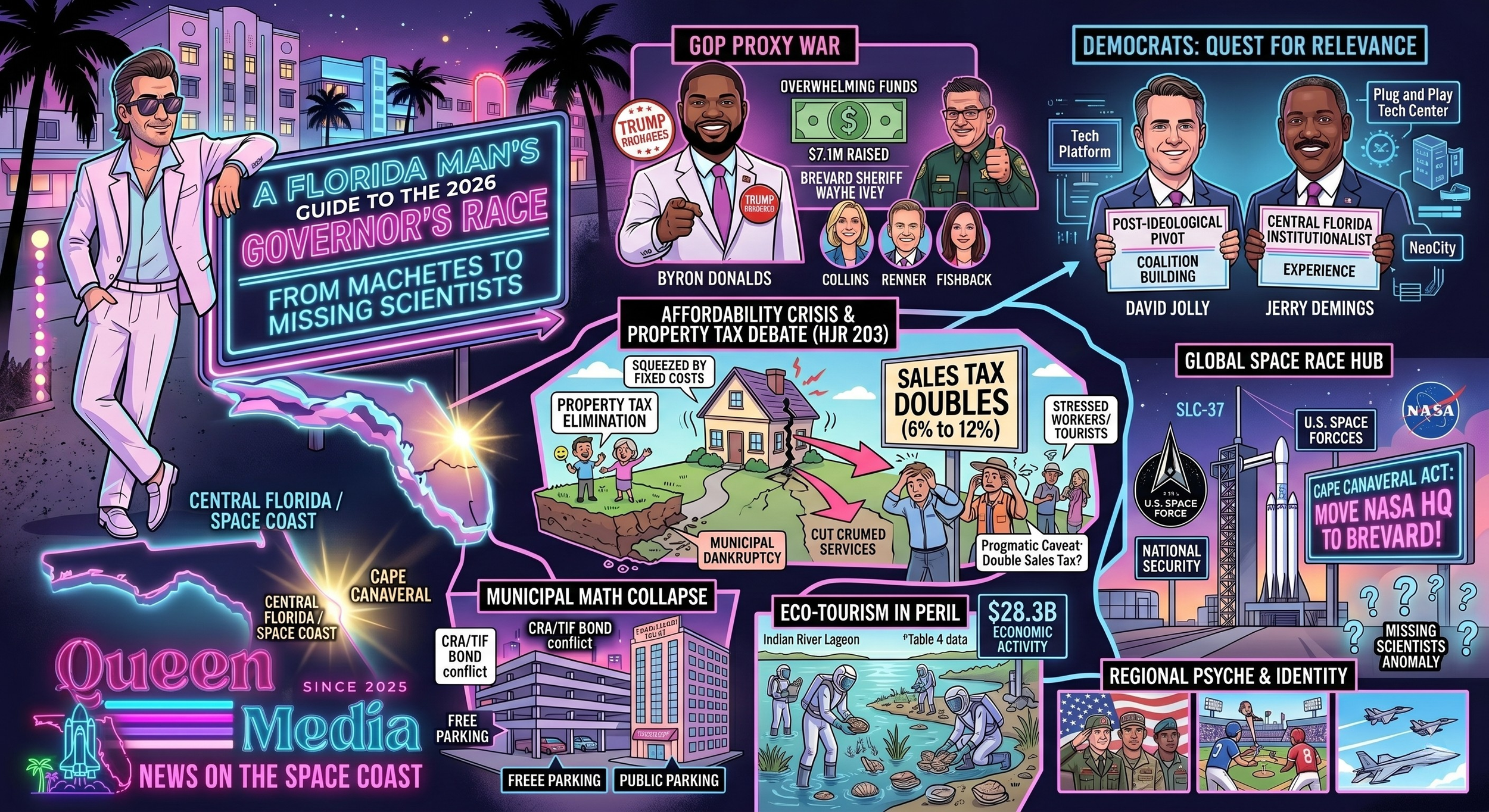
As the State of Florida advances toward the November 3, 2026, gubernatorial election, the political and economic center of gravity has subtly but decisively shifted toward the Space Coast and the broader Central Florida corridor. Florida’s structural transformation into a moderately to strongly conservative stronghold is practically complete; the state has not elected a Democratic governor since 1994, and former President Donald Trump recently captured his adoptive home state by a staggering 13.1% margin in 2024. This electoral performance decisively stripped Florida of its long-held bellwether swing-state status, flipping traditionally Democratic strongholds like Miami-Dade County and establishing a dominant Republican trifecta across all statewide offices. With incumbent Governor Ron DeSantis term-limited and constitutionally ineligible to seek a third consecutive term, the race to inherit the state’s executive mantle has triggered an intense proxy war over the future of the Republican Party, while simultaneously forcing a desperate, existential recalibration strategy for the state's beleaguered Democratic establishment.
Nowhere are the policy implications of this macro-level political transition more concentrated and visible than in Brevard County and the surrounding Space Coast municipalities. This region operates at the high-speed intersection of elite technological innovation, massive federal defense appropriations, professional and collegiate athletics, and localized environmental and municipal crises. As national and state political figures descend upon the region, their broad ideological platforms are continuously stress-tested against the material realities of the Space Coast.
To understand the 2026 gubernatorial race, one must examine it through the specific, localized reporting ecosystem that defines regional discourse. Publications such as Queen Media News on the Space Coast and the Space Coast Sports Podcast, anchored by local analytical voices like Cody Queen, provide the essential framework for this evaluation. These localized outlets highlight the immediate priorities of the electorate: the modernization of aging heavy-lift aerospace infrastructure like Space Launch Complex 37 (SLC-37), the ecological preservation of the $28.3 billion Indian River Lagoon economy, the cascading affordability crisis within the housing and property insurance markets, and the intricate, often contentious mechanics of municipal redevelopment, such as the Eau Gallie parking garage controversy. Furthermore, the region's cultural identity, deeply entwined with military veterans, professional sports, and aerospace history, demands a nuanced political approach from any viable gubernatorial candidate.
This comprehensive report evaluates the 2026 Florida gubernatorial election through the specific, localized lens of Brevard County and the Space Coast. By exhaustively analyzing candidate platforms, campaign finance architecture, granular polling data, and the second and third-order effects of proposed state policies, this analysis provides a definitive assessment of how state-level ambitions will physically, culturally, and economically alter the trajectory of Florida's aerospace and coastal communities.
The Republican Primary: The America First Mandate and the Ascendancy of Byron Donalds
The Republican primary, formally scheduled for August 18, 2026, functions as a high-stakes referendum on the legacy of the DeSantis administration and the persistent ideological grip of the Trump-aligned "America First" movement. Early demographic data and strategic maneuvering indicate that the eventual Republican nominee will be heavily favored to win the general election. Partisan loyalty remains one of the defining features of the 2026 electorate, with roughly 85% to 91% of voters indicating their intention to support their respective party's candidate regardless of the specific general election matchup, a dynamic that heavily weights the structural demographic advantage Republicans have built over the past decade.
The Frontrunner: U.S. Representative Byron Donalds
U.S. Representative Byron Donalds, currently representing Florida's 19th Congressional District, has emerged as the definitive and overwhelming frontrunner to succeed Governor DeSantis. Backed by an early and highly coveted endorsement from former President Donald Trump, Donalds has cultivated a formidable political and financial apparatus that dwarfs his primary competitors in both sheer monetary resources and institutional support.
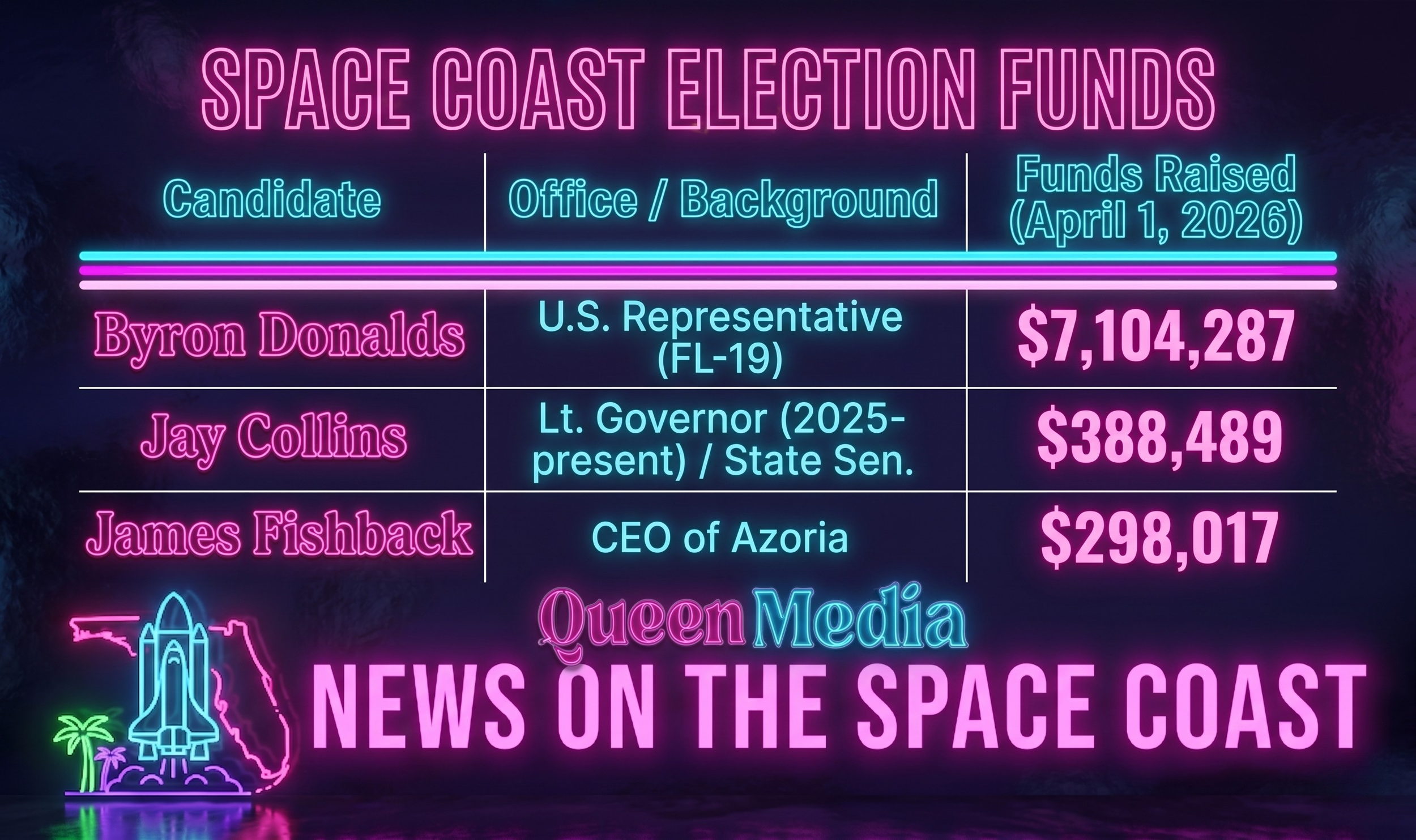
2026 Florida Republican Gubernatorial Primary Campaign Finance Data indicating the overwhelming financial advantage held by Representative Byron Donalds.
An exhaustive analysis of campaign finance reports filed as of April 1, 2026, reveals a stark, almost insurmountable asymmetry in resource allocation among the declared and potential Republican candidates. Donalds has amassed a massive war chest, positioning him to effortlessly dominate the statewide airwaves, fund sophisticated micro-targeted digital campaigns, and sustain exhaustive ground-game operations across all 67 counties.
Donalds' strategic pathway relies on aggressively consolidating the conservative base through a strict law-and-order platform, restrictive immigration policies, and the prioritization of economic and infrastructure modernization. This approach is meticulously engineered to appeal directly to the demographic and institutional forces that dominate the Space Coast. Recognizing the political weight of law enforcement in a region highly concerned with public safety and property crime, Donalds has aggressively and successfully courted the state's top policing officials, securing vital endorsements from 15 of Florida's most prominent county sheriffs.
Crucially for the political calculus on the Space Coast, this endorsement list includes Brevard County Sheriff Wayne Ivey, a highly influential and politically active figure who wields immense sway over regional conservative politics. Ivey's endorsement provides Donalds with an essential, highly credible proxy in a county that values stringent, uncompromising law enforcement—a dynamic routinely underscored by local anxieties regarding crime. Ivey has publicly and enthusiastically praised Donalds as a "no-nonsense champion for law enforcement" who will eradicate progressive "woke policies" and ensure criminals are locked behind bars, effectively signaling to Brevard's conservative electorate that Donalds is the officially sanctioned successor to the DeSantis law-and-order doctrine.
The Challengers: Collins, Renner, and Fishback
Despite Donalds' formidable financial and polling lead, the Republican primary field remains active, highlighting nuanced fissures and competing priorities within the Florida GOP establishment.
Jay Collins: Currently serving as the 21st Lieutenant Governor of Florida—having assumed the role in 2025 following a resignation that required a direct gubernatorial appointment—Collins attempts to leverage his immediate proximity to the DeSantis administration and his background as a U.S. military veteran. However, his fundraising lags significantly behind Donalds, and he has struggled to carve out a distinct ideological lane, though he has attempted to differentiate himself by criticizing Donalds on specific education and tax policies.
Paul Renner: The former Speaker of the Florida House of Representatives (2022–2024), Renner approaches the race as a consummate legislative institutionalist. He is focusing his messaging heavily on the systemic affordability crisis and complex property tax reform. His deep legislative ties and understanding of Tallahassee's mechanics make him a formidable policy architect, though he currently lacks the raw populist momentum and national profile of Donalds.
James Fishback: Representing the absolute furthest right flank of the party, Fishback, CEO of Azoria, has launched incendiary, highly personalized attacks against Donalds. Fishback has utilized racially charged language, referring to Donalds as a "slave to his donors," and pledged extreme policies, such as a total, unconditional abortion ban with no exceptions for rape or incest, the end of all legal and illegal immigration, and the forcible removal of Afghan refugees currently residing in Florida. While mathematically a fringe candidate, Fishback's presence forces Donalds to continuously defend his right flank, preventing an early pivot to the political center for the general election.
Polling data consistently validates Donalds' dominance in the primary. The Emerson College Polling survey and the University of North Florida (UNF) Public Opinion Research Lab consistently show Donalds leading generic Republican primary ballots and holding double-digit leads in hypothetical general election matchups against the leading Democratic contenders.
The Democratic Primary: The Quest for Relevance and the Affordability Coalition
The Florida Democratic Party enters the 2026 election cycle facing a profound existential crisis. Having lost over 700,000 registered voters to Republican gains since 2019—a political migration of historic proportions—the party is attempting to rebuild its shattered coalition in an environment characterized by deep structural disadvantages and acute voter fatigue regarding endless cultural polarization. The 2026 Democratic primary has thus evolved into a contest between two entirely distinct theories of electability: the post-ideological, coalition-building strategy of a former Republican versus the pragmatic, institutionalist appeal of a regional executive.
David Jolly: The Post-Ideological Pivot
David Jolly represents the most unconventional, and arguably the most viable, strategy for the Democrats to reclaim statewide relevance. A former Republican US. Representative who served Florida's 13th Congressional District (Pinellas County) from 2014 to 2017, Jolly left the GOP in 2018, registered as an independent, and co-founded the Forward Party in 2022 alongside Andrew Yang and Christine Todd Whitman. Utilizing his eight-year tenure as a prominent political commentator for MSNBC, Jolly ultimately registered as a Democrat to launch his 2026 gubernatorial bid.
Jolly’s core hypothesis is that the state’s political center has been abandoned by the GOP, and that an electorate exhausted by right-wing culture wars and financially crushed by the cost of living will willingly cross party lines for a "solutions-oriented," post-ideological candidate. Jolly has explicitly targeted the Space Coast and Central Florida as critical geographies for assembling this coalition. Pointing to recent special congressional elections where districts in the Space Coast and the Panhandle swung toward Democrats by up to 15 or 16 points, Jolly argues that Republicans and Independents in these regions are highly receptive to a fundamental change in leadership. He frequently campaigns in Brevard and Manatee counties, utilizing platforms like the Manatee Democratic Party town halls and local Brevard Democratic Executive Committee meetings to meticulously build a grassroots infrastructure.
From a financial and organizational standpoint, Jolly has established a commanding lead over his primary rival, boasting a five-to-one financial edge and positioning himself as the presumptive frontrunner. His platform eschews rigid progressive orthodoxy in favor of a hyper-focus on direct democracy (making it easier for citizens to pass ballot initiatives), environmental stewardship (specifically targeting the Indian River Lagoon and toxic algae blooms), and stabilizing the volatile property insurance market.
Jerry Demings: The Central Florida Institutionalist
Orange County Mayor Jerry Demings offers a stark structural contrast to Jolly's outsider narrative. At 66 years old, Demings is a pragmatic powerhouse with a four-decade career in public service, including distinguished tenures as Orlando Police Chief and Orange County Sheriff. Demings attempts to leverage his deep administrative experience in Central Florida, arguably the most vital swing region in the state, to present a vision of competent, steady governance.
A critical component of Demings' record, often overlooked in statewide analysis, is his aggressive prioritization of technological innovation and advanced manufacturing. In 2024, Demings allocated $1.5 million to bring the Plug and Play Tech Center to Orlando, launching multiple Smart Cities accelerator cohorts that collaborate with entities like Duke Energy and the University of Central Florida (UCF). Furthermore, his administration's support for semiconductor manufacturing accelerators at NeoCity in Osceola County directly reinforces Florida's position in advanced manufacturing—an initiative that resonates deeply with the engineering and tech-heavy electorate of the adjacent Space Coast.
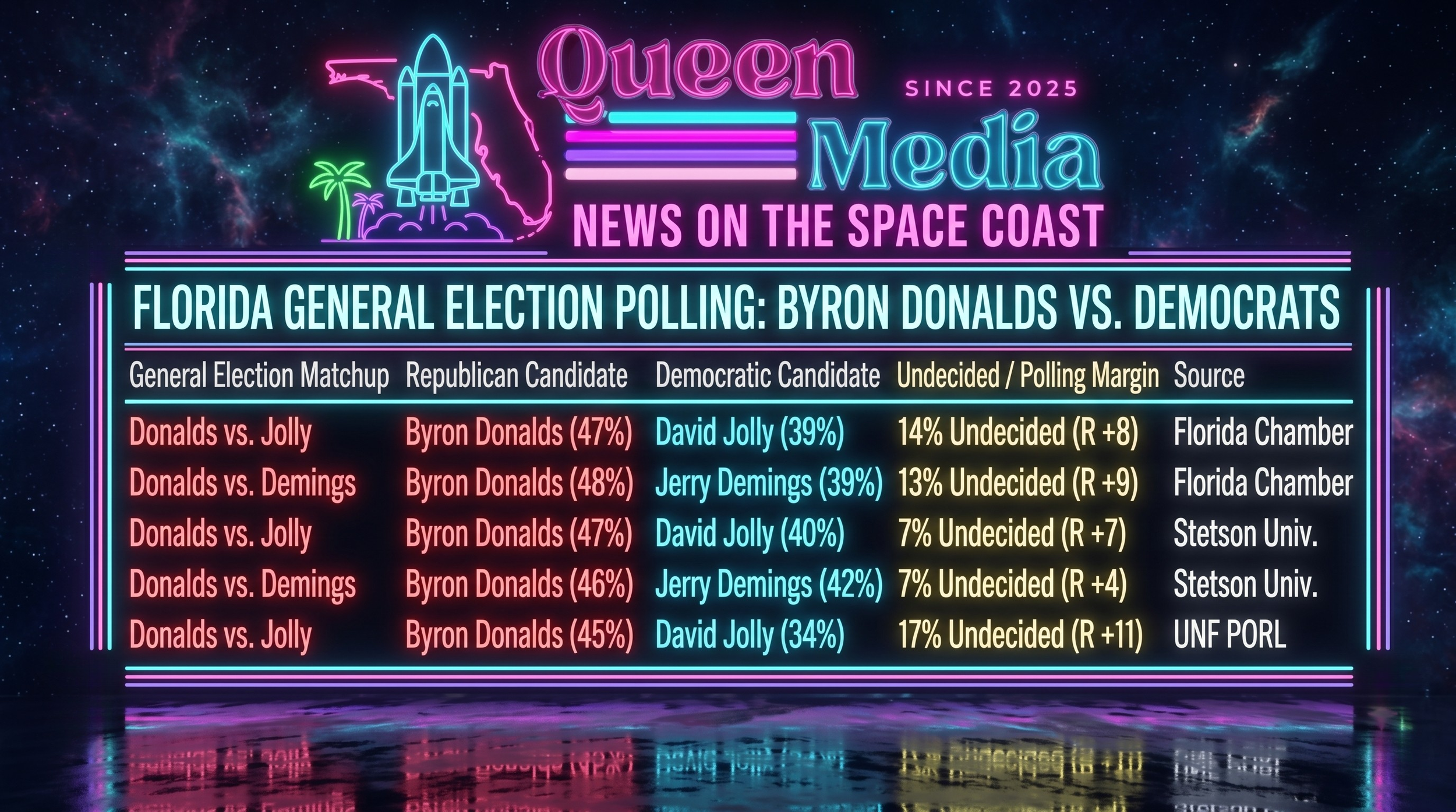
Aggregated Polling Data for 2026 Florida Gubernatorial General Election Matchups indicating consistent Republican advantages but notable percentages of undecided voters.
However, Demings suffers from a severe lack of statewide name recognition outside of the immediate Orlando metropolitan area and has consistently trailed Jolly in both fundraising metrics and early primary polling. In hypothetical general election matchups tested by Stetson University and the Florida Chamber of Commerce, Demings routinely performs slightly worse than Jolly against the Republican frontrunner, Byron Donalds.
The aggregated data reveals a consistent but fluid Republican advantage. While Donalds maintains a comfortable lead in every scenario, the margins—often in the high single digits—indicate that the race is not entirely predetermined. With 7% to 17% of the electorate remaining undecided, particularly among crucial independent voters, the ultimate outcome of the election will hinge entirely on which candidate can credibly and comprehensively solve the state's most pressing material crisis: the skyrocketing cost of living.
The Defining Crisis: Property Taxes, Insurance, and the Affordability Collapse
The primary catalyst for voter anxiety on the Space Coast, and indeed throughout the entire state of Florida, is an acute, escalating affordability crisis driven by compounding fixed costs. Specifically, voters are being crushed by skyrocketing homeowners insurance premiums and escalating property taxes resulting from drastically inflated real estate assessments. A comprehensive survey conducted by the University of North Florida (UNF) Public Opinion Research Lab indicates that housing costs, property insurance, and property taxes collectively represent the single most significant concern for 48% of registered Republicans, far outpacing cultural issues or immigration concerns.
The Legislative Push for Property Tax Elimination: The Saga of HJR 203
In response to this immense economic pressure, Governor DeSantis and the Florida Legislature have initiated one of the most consequential, complex, and potentially destructive fiscal policy debates in the state's modern history: the proposed total elimination of ad valorem property taxes. During the 2026 regular legislative session, several joint resolutions were filed to address this, with CS/CS/HJR 203 emerging as the primary vehicle for structural reform.
HJR 203 proposed a constitutional amendment to systematically eliminate all non-school property taxes on homesteaded properties. The legislation was structured as a phased, multi-year reduction, increasing the standard homestead exemption by $100,000 annually starting in 2027, culminating in the total elimination of non-school ad valorem taxes by the year 2037. A critical, and highly controversial, provision embedded within HJR 203 explicitly prohibited local municipalities and county governments from reducing total funding for law enforcement, firefighters, and other vital first responders, regardless of the loss of tax revenue.
The second and third-order implications of this policy for local governance in Brevard County would be catastrophic. Ad valorem property taxes are the foundational revenue stream for municipal general funds. By eliminating this revenue while simultaneously mandating that massive first responder budgets remain entirely untouched, counties and cities would be forced to enact draconian, unprecedented cuts to public works, infrastructure maintenance, parks, libraries, and essential environmental management programs. In February, March, and April of 2025, the Brevard County Board of County Commissioners (BOCC) hosted multiple exhaustive budget workshops to evaluate funding challenges, realizing that current county millage rates are already straining under existing operational obligations. Stripping these revenues without a massive, guaranteed state-level replacement mechanism would functionally bankrupt non-emergency municipal services on the Space Coast.
The Legislative Timeline and the Upcoming Special Session
Despite heavy political pressure, the legislative path for HJR 203 was fraught with institutional resistance. The regular session began on January 13, 2026, and while HJR 203 passed the Florida House on a strict party-line 80-30 vote in February 2026, it ultimately died in the Senate when the regular session concluded on March 13, 2026. An April 2026 special session dedicated to redistricting actively excluded property tax reform from its agenda.
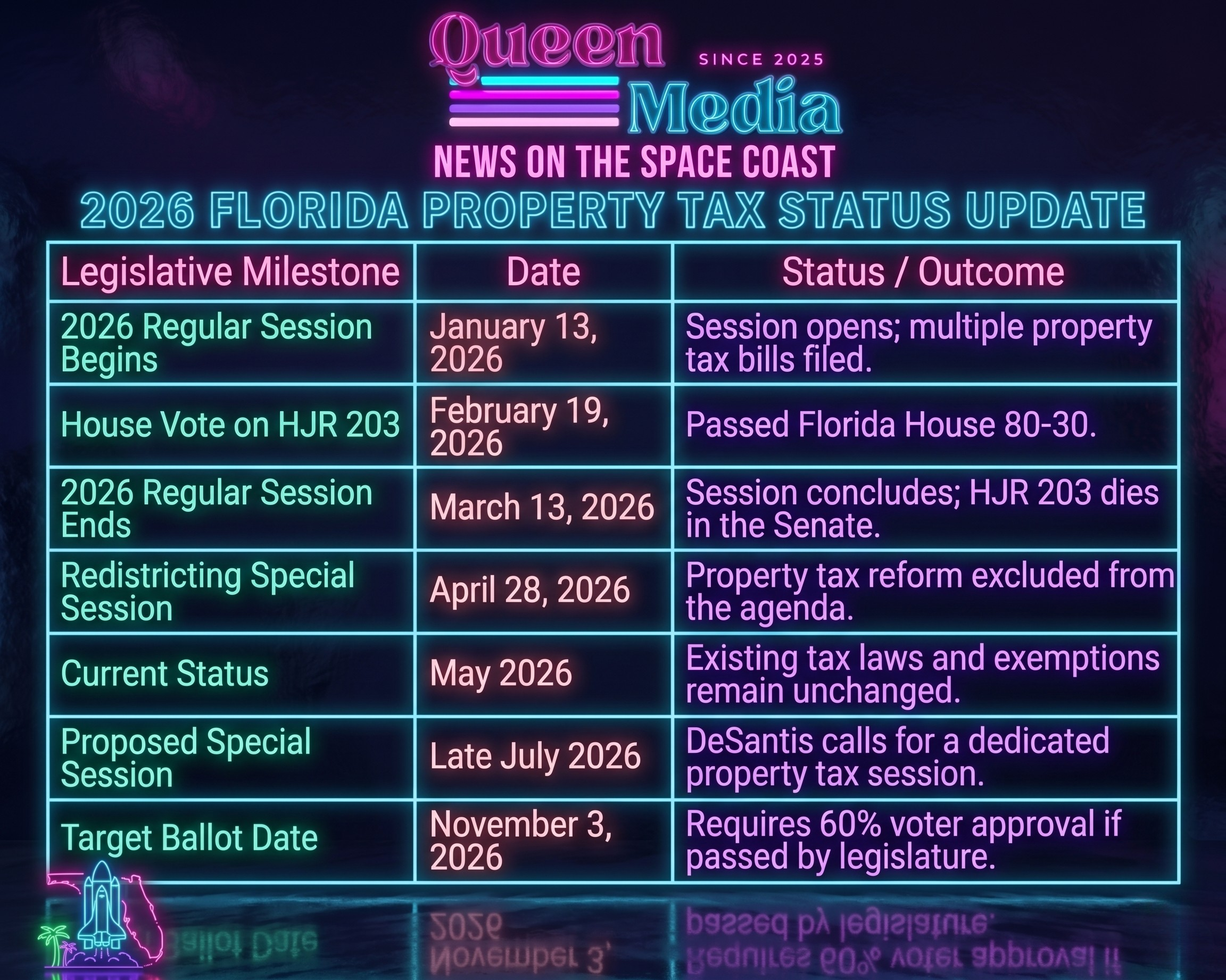
2026 Florida Legislative Timeline Regarding Property Tax Elimination (HJR 203).
Consequently, as of May 2026, Florida's current property tax laws, including the standard $50,000 homestead exemption and the vital 3% Save Our Homes assessment cap, remain entirely unchanged. However, recognizing the immense political volatility of the affordability issue heading into the November elections, Governor DeSantis has mandated a dedicated summer special session slated for late July 2026. This session is intended to force the amendment through the legislature in time to secure its placement on the November ballot, where it would require a 60% supermajority voter approval to become constitutional law.
The Gubernatorial Candidates' Fiscal Calculus
The impending property tax debate forces the 2026 gubernatorial candidates into highly complex political and mathematical calculations. Byron Donalds supports the elimination of property taxes conceptually to align with the populist base, but he has introduced a vital, pragmatic caveat that separates him from the more radical legislative proponents in Tallahassee. Donalds has publicly and repeatedly warned that entirely eliminating property taxes would mathematically require the state to double its 6% sales tax to make up the revenue shortfall. Such a move would disproportionately penalize working-class Floridians, inflate the cost of everyday goods, and devastate the state's foundational tourism industry. Instead, Donalds advocates for a massive, structural expansion of the homestead exemption, proposing increases from the current $50,000 up to $300,000 or $400,000.
This nuanced stance places Donalds in alignment with fiscal conservatives like U.S. Senator Rick Scott, who has similarly questioned how education and vital infrastructure programs would be funded in the absence of property taxes. However, Donalds' position has opened him to attacks from Democrats, who point out that school districts—which receive roughly 40% of state property tax revenues—are actually constrained by state-mandated levy rates, and that skyrocketing property values, not profligate local school board spending, are driving tax bills higher.
David Jolly and Paul Renner have seized upon this affordability crisis as the absolute cornerstone of their respective campaigns. Renner has hosted high-profile "Affordability Now" roundtables, utilizing his legislative background to propose intricate reforms, while Jolly argues that Republican leadership in Tallahassee has spent a decade prioritizing ideological culture wars over the stabilization of the insurance and housing markets. For Space Coast residents, whose real estate market has seen intense, almost unprecedented appreciation due to the massive influx of aerospace engineering talent, the resolution of this tax and insurance debate is the single most deterministic factor for their long-term economic viability and ability to remain in their homes.
Local Microcosm: Municipal Finance, TIFs, and the Eau Gallie Parking Garage Saga
The macro-level debates in Tallahassee regarding property taxes and municipal funding are not abstract concepts; they are vividly illustrated by localized redevelopment conflicts occurring right now in Brevard County. As exhaustively analyzed in local coverage by Queen Media News, the controversy surrounding the Eau Gallie Arts District (EGAD) parking garage in Melbourne serves as a perfect, highly volatile microcosm of the systemic friction between private developers, municipal ambition, and county-level fiscal restraint.
The Concrete Catalyst: The Unscripted Hotel and the P3 Garage
EGAD, once a stagnant riverfront corridor, has experienced a rapid economic renaissance over the past decade, transforming into a bustling nexus of commerce and art through aggressive public-private intervention and infrastructure investment. The linchpin of the district's next evolutionary phase involves the demolition of the former Foosaner Art Museum site to construct the "Unscripted Hotel," a four-star, 160-room luxury boutique facility operated by the Dream Hotel Group.
Because the hotel’s immense density requires the total eradication of existing surface parking in the area, developer Larry Jarnes and Melbourne Hospitality Holdings initiated an unsolicited Public-Private Partnership (P3) with the city. Their proposal was to construct a massive municipal joint-use parking garage on adjacent city-owned land next to the Eau Gallie Civic Center. Originally conceptualized as a 500-space facility, the project underwent intense financial revision, ultimately scaling to a $12.075 million budget for a 300-space concrete structure.
The Mechanics of Tax Increment Financing (TIF) and County Backlash
The financing of this $12 million structure relies entirely on the Olde Eau Gallie Riverfront Community Redevelopment Agency (CRA) and the highly complex mechanism of Tax Increment Financing (TIF). TIF operates by establishing a baseline property valuation for a specific blighted district upon its creation. As property values rise over time due to development and inflation, the additional ad valorem tax revenues (the "increment") are captured and sequestered into a trust fund restricted exclusively for reinvestment within the district, rather than flowing into the city or county's general funds to pay for broader services.
To finance the massive upfront construction costs of the garage, the City of Melbourne authorized the issuance of a "CRA Future Revenue Bond". This financial maneuver legally commits decades of projected future TIF revenues to service the debt on the $12.075 million facility.
However, because this mechanism effectively starves the Brevard County general fund of rising property tax revenues at a time when the county desperately needs funds for infrastructure and environmental management, the project triggered a fierce, highly publicized intergovernmental battle. The Brevard County Commission, acting aggressively to protect its shrinking tax base, intervened decisively. The County forced the City of Melbourne into a highly restrictive Interlocal Agreement, mandating strict parameters that fundamentally altered the project's financial calculus and operational model:
Shortened CRA Lifespan: The County capped the EGAD CRA's legal existence, forcing an early sunset date of 2033. This severely limited the time horizon over which TIF funds could be harvested to pay off the massive municipal bonds.
Public Parking Mandate: To prevent the structure from becoming a taxpayer-subsidized private amenity, the County demanded that 270 of the 300 spaces be dedicated exclusively to general public parking, capping the luxury hotel’s exclusive-use spots at a mere 30 spaces.
The Free Parking Epoch: In a direct, targeted rebuke to Melbourne's standard operating procedure of utilizing punitive paid parking meters to stimulate turnover, Brevard County mandated that the garage must provide 15 years of entirely free public parking, followed by 10 years of restricted rates limited strictly to maintenance-fee recovery.
Third-Order Implications and Public Trust
The exhaustive EGAD garage saga illuminates the profound ethical and financial complexities of Florida's redevelopment statutes. Proponents of the P3 model argue that the garage is an absolute necessity to elevate the district's tax base, alleviate critical parking shortages, and support long-term commercial viability. Critics, however, view the aggressive TIF capture as a localized wealth transfer—redirecting millions in public funds to subsidize concrete infrastructure for a private luxury boutique hotel while the county at large faces catastrophic infrastructure deficits.
This dynamic is exacerbated by civic activists who argue that allocating $12 million in CRA funds to a parking structure is deeply irresponsible while the nearby Indian River Lagoon suffers from ongoing ecological collapse. Furthermore, the lack of transparency in the P3 negotiations has led to unsubstantiated but politically damaging local allegations of inappropriate relationships between municipal leaders and private developers, severely eroding public trust in local governance.
Crucially, if the state legislature succeeds in eliminating non-school property taxes via HJR 203 during the upcoming July special session, the foundational math underpinning CRAs and TIF bonds across the state will instantly collapse. Without property tax increments to capture, projects like the EGAD garage will be plunged into profound financial jeopardy, potentially leaving municipalities to default on millions in bond obligations.
The Environmental Imperative: Restoring the Indian River Lagoon
While municipal battles rage over concrete infrastructure and localized tax capture, the true existential threat to the Space Coast remains the ongoing ecological degradation of the Indian River Lagoon (IRL). Stretching 156 miles along Florida's east coast, this massive estuary was once defined by expansive seagrass beds, crystal-clear water, and globally significant biodiversity. However, decades of unchecked nutrient pollution, severe habitat loss, and devastating toxic algal blooms (including persistent strains of Karenia brevis red tide) have decimated the ecosystem. This degradation routinely causes massive fish kills, widespread manatee starvation, and severe economic disruption for coastal businesses.
The stakes regarding the IRL are not merely environmental or aesthetic; they are overwhelmingly economic. A recent comprehensive study quantified the lagoon's impact, revealing that the estuary generates an astounding $28.3 billion in local economic activity, underpinning the region's massive recreational fishing, eco-tourism, and highly inflated real estate sectors. The continued collapse of the lagoon translates directly to the collapse of waterfront property values, which in turn threatens the ad valorem tax base that funds local government operations.
State and Federal Funding Initiatives
Recognizing the immense severity of the crisis, ecosystem restoration has secured rare bipartisan consensus and massive capital allocation at both the state and federal levels. Governor DeSantis’s "Floridians First" 2026-2027 budget proposal included over $1.4 billion dedicated to Everglades and statewide water quality initiatives, specifically earmarking $100 million for priority restoration areas in the Indian River Lagoon and Biscayne Bay.
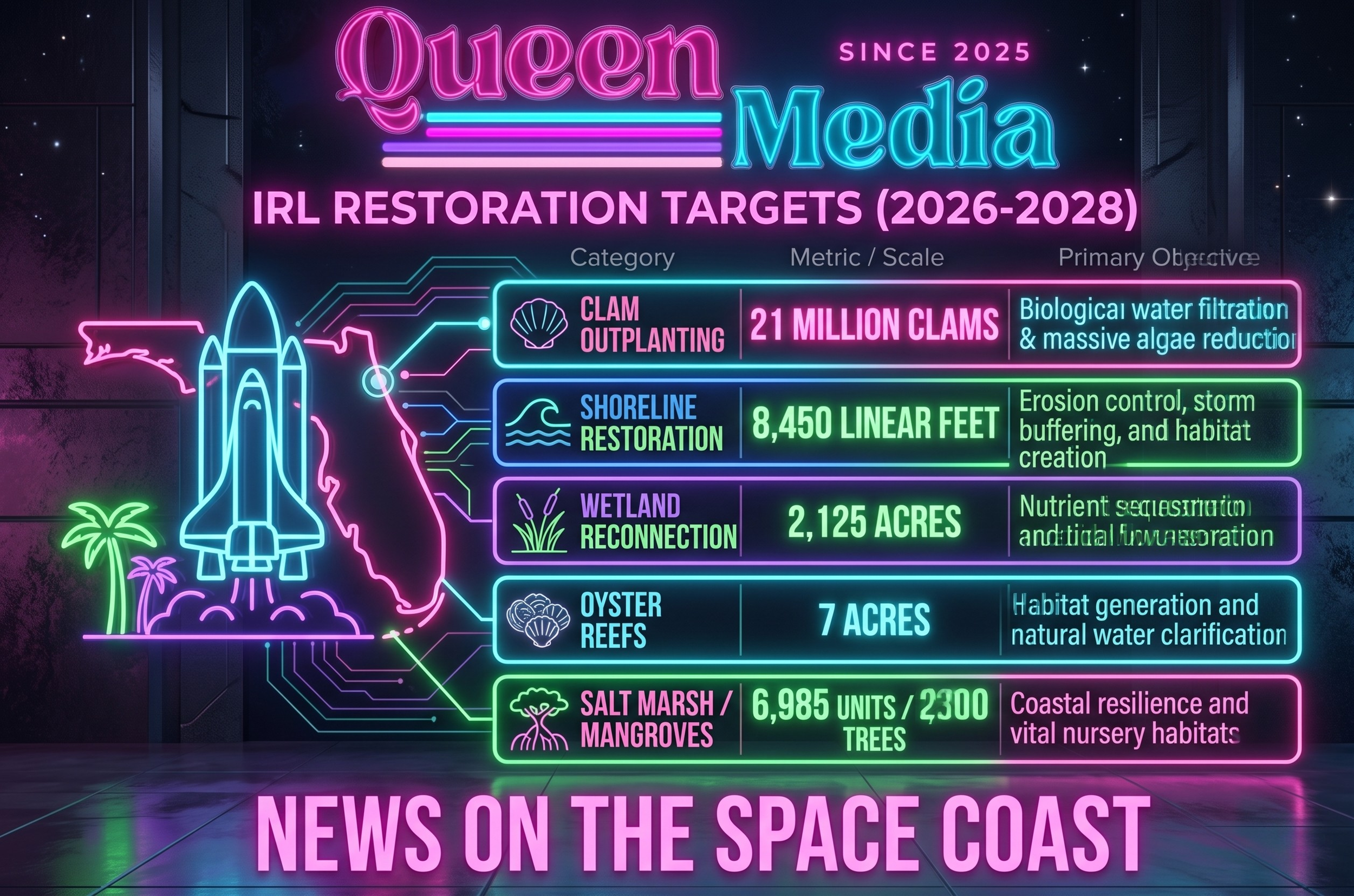
Ecosystem-wide Restoration Targets under the NOAA/IRL Council Partnership.
Locally, the immense financial burden of restoration has been heavily supported by a Brevard County half-cent sales tax, initially approved by voters in 2016 and slated to expire at the end of 2026. This critical local funding stream has been systematically synthesized with federal grants, such as a recent $9.4 million allocation from NOAA Fisheries' Office of Habitat Conservation. Over a two-year operational window (2026-2028), the Indian River Lagoon Council and its various institutional partners are executing 15 high-impact, ecosystem-wide projects designed to aggressively re-engineer the estuary's biological filtration capacity.
The Regulatory Permitting Battle and Candidate Platforms
The physical restoration of the lagoon is currently entangled in a highly complex jurisdictional dispute over wetland permitting between the state and the federal government. In 2018, Florida successfully assumed authority from the U.S. Army Corps of Engineers to manage its own "dredge and fill permitting program" under the Clean Water Act, aiming to cut bureaucratic red tape and streamline approvals for environmental, municipal, and residential projects. However, in 2024, a federal court in Washington D.C. invalidated the program, a ruling ultimately upheld by the D.C. Circuit in 2025, thereby returning complete permitting authority to the federal government.
This sudden reversion to Army Corps oversight has introduced massive bureaucratic delays across the state, paralyzing everything from vital utility upgrades and shoreline stabilization to single-family home construction on the Space Coast. In response, federal lawmakers, including Representative Brian Mast, have introduced the "Restore Florida Water Independence Act of 2026," a legislative effort to formally repatriate permitting authority back to Tallahassee to accelerate restoration projects.
For the 2026 gubernatorial candidates, articulating a cohesive plan for the health of the IRL is a mandatory platform plank. Byron Donalds has consistently leveraged his legislative record on water issues, highlighting his introduction of the Protecting Communities from Harmful Algal Blooms Act and the Harmful Algal Bloom Essential Forecasting Act, successfully integrating environmental stewardship into his broader economic and infrastructure platform. Conversely, David Jolly utilizes the persistence of toxic algae blooms and red tide to sharply criticize the current administration's environmental record, pointing to a lack of preemptive research funding and the need for deeper systemic reform to protect the coastal economy.
Aerospace Dominance, Tech Innovation, and National Security
The defining characteristic of Brevard County is its status as the premier hub for global aerospace engineering and national security launch operations. As the United States engages in an escalating, high-stakes space race with international competitors, particularly China, the operational cadence at the Cape Canaveral Space Force Station and the Kennedy Space Center has become a matter of paramount national security. The 2026 election cycle is intrinsically linked to the executive policies that will govern this sector's rapid expansion.
The Modernization of Space Launch Complex 37 (SLC-37)
The most pressing infrastructural bottleneck currently facing the Eastern Range is the obsolescence of its heavy-lift launch facilities. Space Launch Complex 37 (SLC-37) is historically one of the few pads capable of supporting heavy-lift rockets, but as of 2025, it sits completely idle, constrained by outdated infrastructure and crippling regulatory paralysis.
The United States Air Force and Space Force have agreed to demolish the legacy structures at SLC-37 under a Categorical Exclusion (CATEX), but the approval process for the construction of next-generation heavy-lift capabilities remains mired in prolonged environmental and bureaucratic review. Recognizing that assured access to space is absolutely foundational to military, intelligence, and civil programs, Florida's conservative leadership has initiated an aggressive bicameral pressure campaign.
U.S. Representative Byron Donalds and Senator Ashley Moody have formally petitioned Air Force Secretary Troy Meink, urging the Department of the Air Force (DAF) to immediately apply its CATEX authority to bypass prolonged environmental impact studies and authorize the immediate construction of core launch structures. Donalds' highly proactive leadership on SLC-37, which included high-profile site assessments alongside NASA, Space Force, and SpaceX officials in July 2025, provides him with exceptional credibility among the tens of thousands of aerospace engineers, technicians, and defense contractors who reside on the Space Coast.
The CAPE Canaveral Act and the Relocation of NASA Headquarters
Donalds has further cemented his Space Coast bona fides by introducing H.R. 2422, the "Consolidating Aerospace Programs Efficiently at Canaveral Act" (CAPE Canaveral Act). Co-led by a bipartisan coalition including Representatives Mario Díaz-Balart, Jared Moskowitz, and Debbie Wasserman-Schultz, the legislation legally mandates the physical transfer of the National Aeronautics and Space Administration (NASA) Headquarters from Washington D.C. to Brevard County within one year of enactment.
This proposal represents a paradigm-shifting policy objective. Relocating NASA’s administrative epicenter to the operational frontlines of the Space Coast would dramatically streamline operations, drastically reduce inter-agency travel friction, and permanently consolidate Florida's position as the undisputed capital of the global space economy. For Brevard County, a massive influx of federal administrative personnel and corresponding private sector contractors would further turbocharge local property values, commercial development, and technological investment. However, it would paradoxically exacerbate the region's already severe housing affordability crisis, directly linking back to the systemic property tax debate.
National Security Vulnerabilities: The Missing Scientists Anomaly
The intense concentration of defense, intelligence, and aerospace assets also exposes the Space Coast region to uniquely high-stakes national security vulnerabilities. As detailed in extensive reporting by Queen Media News, the region has recently found itself entangled in a chilling federal investigation overseen by the White House, the FBI, and the House Oversight Committee.
Since 2022, eleven highly cleared U.S. scientists and aerospace engineers have vanished or died under mysterious, highly irregular circumstances. This disturbing pattern has prompted House Oversight Chair James Comer to publicly declare a "high possibility that something sinister is taking place" within the defense corridor. While local media occasionally frames such narratives through the lens of peculiar, localized "Florida Man" crime blotters—such as machete-wielding karaoke patrons—the unprecedented federal "holistic review" into these highly sensitive disappearances serves as a stark, undeniable reminder of the immense geopolitical gravity centered in Brevard County's defense ecosystem. The gubernatorial candidate who can most convincingly articulate a robust platform protecting this vital national security infrastructure, while reassuring the highly educated engineering populace, will secure a decisive advantage.
Cultural Vectors: Veterans, Athletics, and the Space Coast Identity
Beyond macro-economics and aerospace infrastructure, the political psyche of the Space Coast is deeply influenced by its unique cultural identity, which any successful gubernatorial campaign must navigate. The region's identity is inextricably linked to military service, professional and collegiate athletics, and aviation history.
Queen Media News frequently highlights the deep connection between the community and its veteran population, emphasizing the "invisible wounds" carried by former service members and promoting local initiatives that pause to honor military service. This profound respect for the military aligns perfectly with the conservative law-and-order and national security platforms pushed by candidates like Donalds and Collins.
Furthermore, the region is a powerhouse for athletic development, anchored by massive facilities like the USSSA Space Coast Complex in Viera, Florida, which hosts national tournaments and draws significant sports tourism revenue. The local sports culture, deeply covered by the Space Coast Sports Podcast, acts as a unifying community force that transcends typical partisan divides.
Finally, the region's civic pride is routinely showcased through massive aviation events. In April 2026, the Cocoa Beach Air Show will feature the U.S. Navy Blue Angels executing high-altitude maneuvers to commemorate America’s 250th birthday. This event is not merely a spectacle; it is a profound testament to the Space Coast's enduring legacy as the premier destination for aerospace excellence. Gubernatorial candidates who tap into this localized pride—by supporting infrastructure, protecting the environment that hosts these events, and championing the defense sector—will find a highly receptive audience.
Conclusion: The Convergence of State Ambition and Local Reality
As the November 2026 gubernatorial election rapidly approaches, the state of Florida stands at a highly volatile legislative and economic juncture. The candidates vying to succeed Governor Ron DeSantis are operating in a political ecosystem defined by aggressive conservative policymaking, shifting demographics, and highly complex structural challenges that defy simple partisan rhetoric.
The Republican frontrunner, U.S. Representative Byron Donalds, possesses a commanding structural and financial advantage. He is expertly leveraging unprecedented campaign resources, the highly influential endorsement of Donald Trump, and a meticulously synchronized strategy with local law enforcement figures like Brevard County Sheriff Wayne Ivey to secure the conservative base. Donalds' mastery of Space Coast-specific issues—from strongly advocating for the immediate modernization of SLC-37 to introducing sweeping legislation to relocate NASA Headquarters to Brevard County—demonstrates a highly sophisticated alignment with the region's powerful, economically vital aerospace voting bloc.
Conversely, the Democratic strategy, helmed predominantly by the post-ideological candidate David Jolly, relies entirely on the assumption that the compounding, crushing pressures of the affordability crisis will eventually override deeply ingrained partisan loyalty. By framing the election explicitly around the immediate stabilization of property insurance, the aggressive protection of the coastal environment, and a firm rejection of ideological extremism, Jolly attempts to construct a fragile but potent coalition of Democrats, Independents, and financially exhausted Republicans.
However, the ultimate determinant of the 2026 election will not be national cultural narratives, but rather the highly localized, mathematically unforgiving arithmetic of affordability and municipal finance. The looming, high-stakes battle over HJR 203 and the potential total elimination of non-school property taxes poses an existential question for the fundamental future of Florida's governance. If successful during the upcoming July special session, the policy will provide unprecedented financial relief to homeowners, but it will simultaneously detonate the financial frameworks that support basic municipal services, infrastructure maintenance, and complex redevelopment projects like the Eau Gallie P3 parking garage.
Furthermore, the ecological survival of the massive $28.3 billion Indian River Lagoon economy remains intrinsically tied to state capital allocations and ongoing federal permitting disputes. The intense intersection of these environmental, fiscal, and technological imperatives ensures that the Space Coast will not merely serve as a passive backdrop for the 2026 election, but rather as the definitive, unforgiving proving ground for the policies that will dictate Florida's economic and political trajectory into the next decade.
